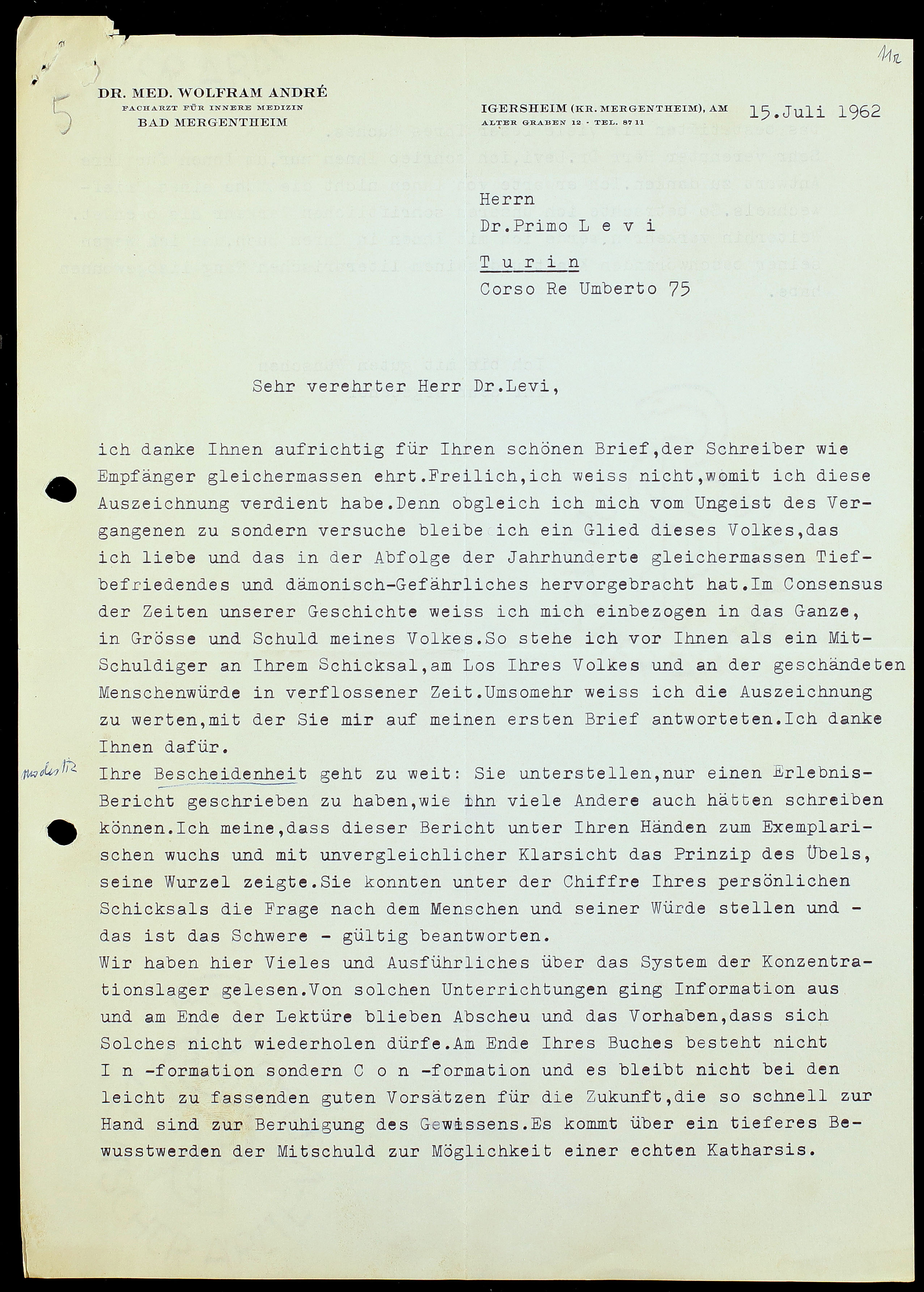
André thanks the author for his reply and emphasizes that Ist das ein Mensch is much more than an account of his experiences.
15 Juli 1962
Herrn Dr. Primo Levi Turin Corso Re Umberto 75
Sehr verehrter Herr Dr. Levi,
ich danke Ihnen aufrichtig für Ihren schönen Brief, der Schreiber wie Empfänger gleichermassen ehrt. Freilich, ich weiss nicht, womit ich diese Auszeichnung verdient habe. Denn obgleich ich mich vom Ungeist des Vergangenen zu sondern versuche bleibe ich ein Glied dieses Volkes, das ich liebe und das in der Abfolge der Jahrhunderte gleichermassen Tiefbefriedendes und dämonisch-Gefährliches hervorgebracht hat. Im Consensus der Zeiten unserer Geschichte weiss ich mich einbezogen in das Ganze, in Grösse und Schuld meines Volkes. So stehe ich vor Ihnen als ein Mit-Schuldiger an Ihrem Schicksal, am Los Ihres Volkes und an der geschändeten Menschenwürde in verflossener Zeit. Umsomehr weiss ich die Auszeichnung zu werten, mit der Sie mir auf meinen ersten Brief antworteten. Ich danke Ihnen dafür.
Ihre Bescheidenheit[1] geht zu weit: Sie unterstellen, nur einen Erlebnisbericht geschrieben zu haben, wie ihn viele Andere auch hätten schreiben können. Ich meine, dass dieser Bericht unter Ihren Händen zum Exemplarischen wuchs und mit unvergleichlicher Klarsicht das Prinzip des Übels, seine Wurzel zeigte. Sie konnten unter der Chiffre Ihres persönlichen Schicksals die Frage nach dem Menschen und seiner Würde stellen und – das ist das Schwere – gültig beantworten.
Wir haben hier Vieles und Ausführliches über das System der Konzentrationslager gelesen. Von solchen Unterrichtungen ging Information aus und am Ende der Lektüre blieben Abscheu und das Vorhaben, dass sich Solches nicht wiederholen dürfe. Am Ende Ihres Buchesbesteht nicht In-formation sondern Con-formation und es bleibt nicht bei den leicht zu fassenden guten Vorsätzen für die Zukunft, die so schnell zur Hand sind zur Beruhigung des Gewissens. Es kommt über ein tieferes Bewusstwerden der Mitschuld zur Möglichkeit einer echten Katharsis.
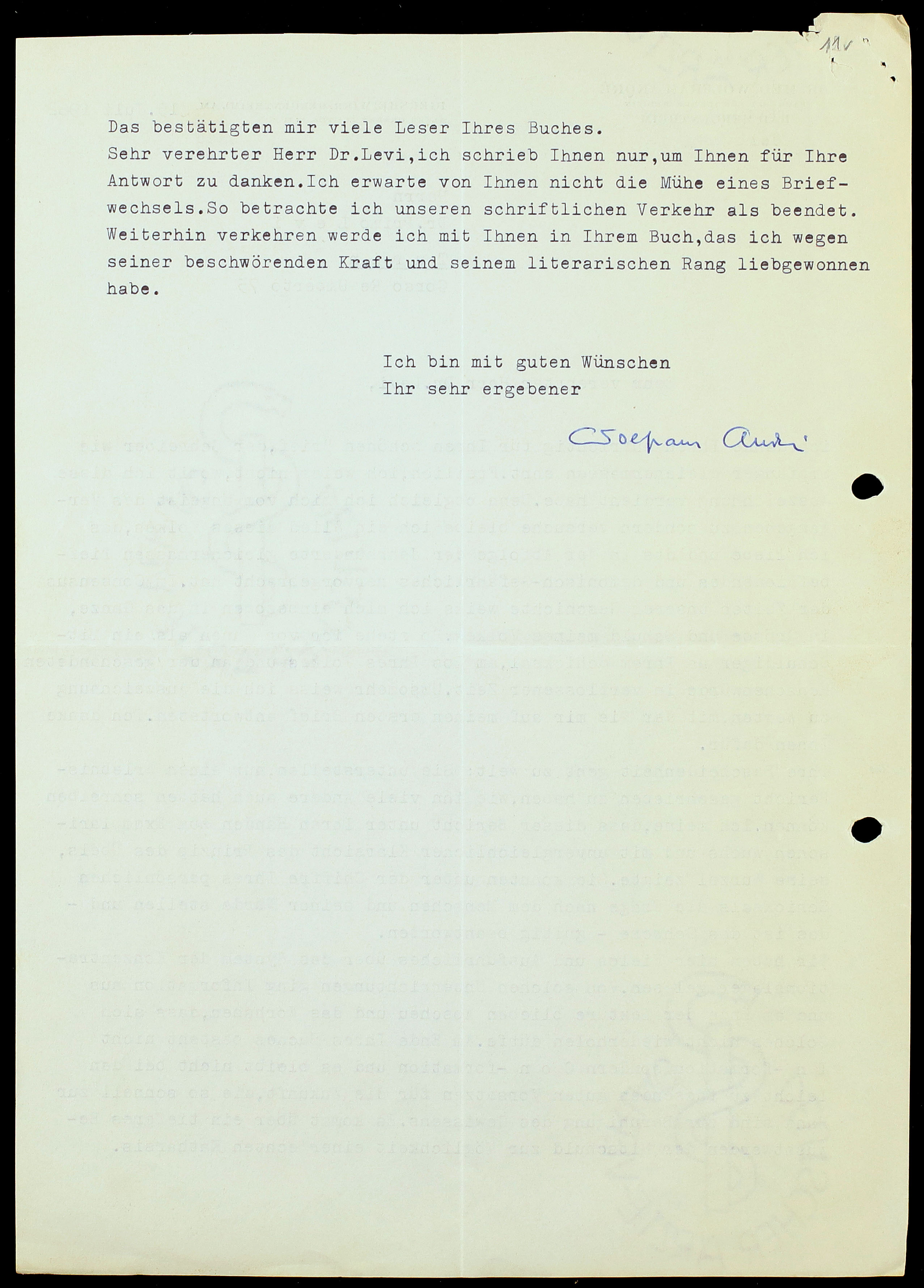
Das bestätigten mir viele Leser Ihres Buches.
Sehr verehrter Herr Dr. Levi, ich schrieb Ihnen nur, um Ihnen für Ihre Antwort zu danken. Ich erwarte von Ihnen nicht die Mühe eines Briefwechsels. So betrachte ich unseren schriftlichen Verkehr als beendet. Weiterhin verkehren werde ich mit Ihnen in Ihrem Buch, das ich wegen seiner beschwörenden Kraft und seinem literarischen Rang liebgewonnen habe.
Ich bin mit guten Wünschen Ihr sehr ergebener
Wolfram André
Dr. Wolfram André
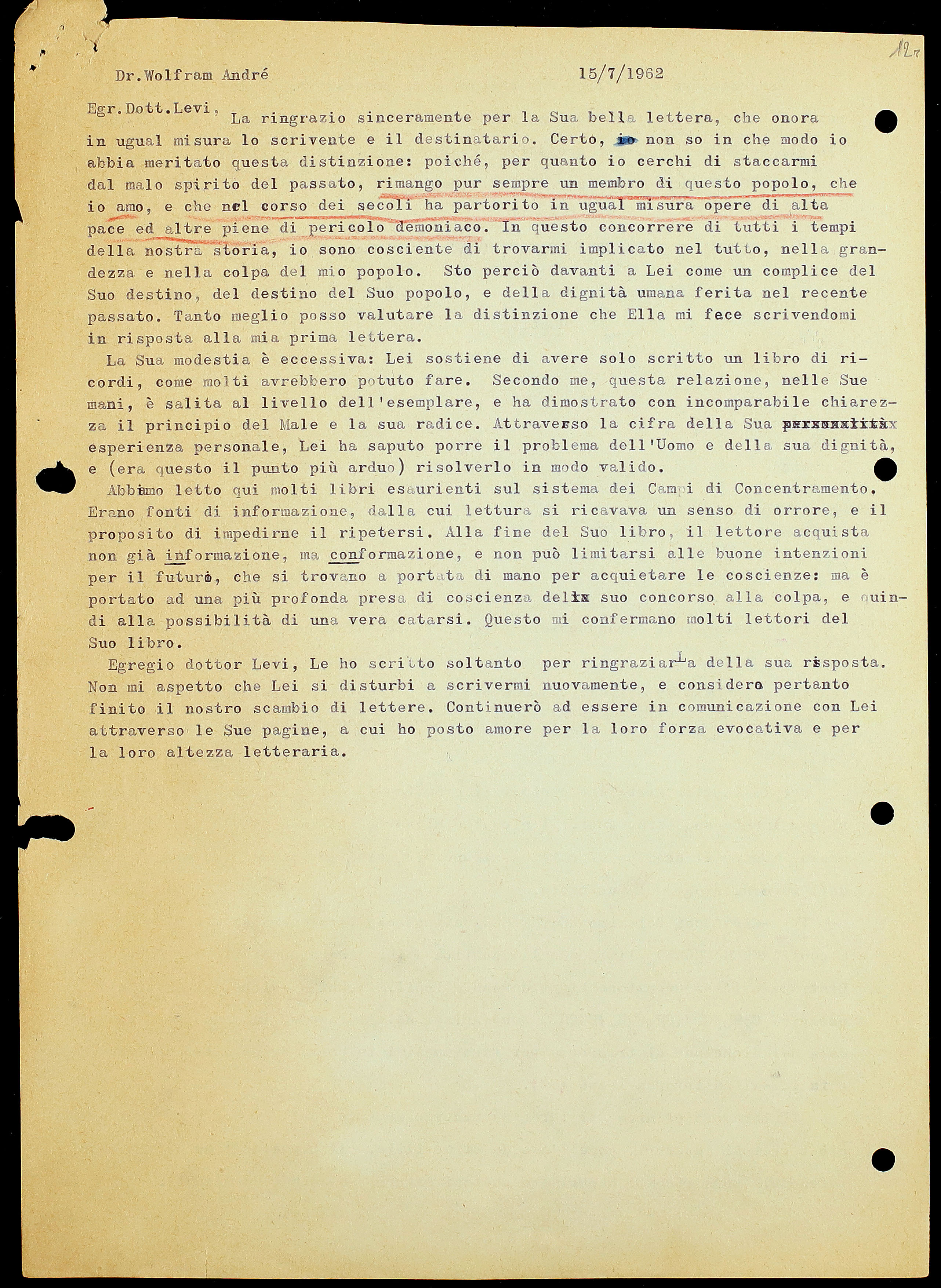
15/7/1962
Egr. Dott. Levi,
La ringrazio sinceramente per la Sua bella lettera, che onora in ugual misura lo scrivente e il destinatario. Certo,I non so in che modo io abbia meritato questa distinzione: poiché, per quanto io cerchi di staccarmi dal malo spirito del passato, rimango pur sempre un membro di questo popolo, che io amo, e che nel corso dei secoli ha partorito in ugual misura opere di alta pace ed altre piene di pericolo demoniaco.IIIn questo concorrere di tutti i tempi della nostra storia, io sono cosciente di trovarmi implicato nel tutto, nella grandezza e nella colpa del mio popolo. Sto perciò davanti a Lei come un complice del Suo destino, del destino del Suo popolo, e della dignità umana ferita nel recente passato. Tanto meglio posso valutare la distinzione che Ella mi fece scrivendomi in risposta alla mia prima lettera.
La Sua modestia[1] è eccessiva: Lei sostiene di avere solo scritto un libro di ricordi, come molti avrebbero potuto fare. Secondo me, questa relazione, nelle Sue mani, è salita al livello dell’esemplare, e ha dimostrato con incomparabile chiarezza il principio del Male e la sua radice. Attraverso la cifra della SuaIII esperienza personale, Lei ha saputo porre il problema dell’Uomo e della sua dignità, e (era questo il punto più arduo) risolverlo in modo valido.
Abbiamo letto qui molti libri esaurienti sul sistema dei Campi di Concentramento. Erano fonti di informazione, dalla cui lettura si ricavava un senso di orrore, e il proposito di impedirne il ripetersi. Alla fine del Suo libro, il lettore acquista non già informazione, ma conformazione, e non può limitarsi alle buone intenzioni per il futuro, che si trovano a portata di mano per acquietare le coscienze: ma è portato ad una più profonda presa di coscienza delIV suo concorso alla colpa, e quindi alla possibilità di una vera catarsi. Questo mi confermano molti lettori del Suo libro.
Egregio dottor Levi, Le ho scritto soltanto per ringraziarLa della sua risposta. Non mi aspetto che Lei si disturbi a scrivermi nuovamente, e considero pertanto finito il nostro scambio di lettere. Continuerò ad essere in comunicazione con Lei attraverso le Sue pagine, a cui ho posto amore per la loro forza evocativa e per la loro altezza letteraria.
July 15, 1962
Mr.
Dr. Primo Levi
Turin
Corso Re Umberto 75
Most esteemed Mr. Levi,
I sincerely thank you for your lovely letter, which does such honor to both writer and recipient. Of course, I do not know what I have done to deserve this distinction. For although I try to distance myself from the evil spirit of the past, I remain a member of this people, whom I love and who, over the centuries, have produced both deeply satisfying and demonically dangerous things. In the consensus of the times of our history, I know that I am part of the whole, of the greatness and guilt of my people. So I stand before you as an accomplice in your fate, in the fate of your people, and in the violated human dignity of times past. All the more, I know how to value the distinction with which you responded to my first letter. I thank you for that.
Your modesty[1] goes too far: you assume you have merely written an account of your experiences, as so many others could have. I believe that such an account has grown into something exemplary in your hands, exposing the principle of evil and its roots with incomparable clarity. Under the guise of sharing your personal fate, you were able to pose this question regarding humanity and its dignity and—this is the difficult part—offer a valid answer.
We have read a great deal here about the concentration camp system. Such lessons offered information, and at the end of these readings, we were left with revulsion and the conviction that such things must never again be repeated. At the end of your book, though, there is not so much in-formation as con-formation, and it does not stop at easily grasped good intentions for the future, which are so readily available to appease the conscience. From this deeper awareness of complicity arises the possibility of genuine catharsis.
Many readers of your book have said as much to me.
Dear Mr. Levi, I now write solely to thank you for your reply. I do not expect you to go to the trouble of corresponding with me. I therefore consider this the end of our written correspondence.
I will continue to exchange ideas with you through your book, whose evocative power and literary merit I have come to love.
Sending good wishes,
most sincerely yours,
Wolfram André
15 Juli 1962
Herrn Dr. Primo Levi Turin Corso Re Umberto 75
Sehr verehrter Herr Dr. Levi,
ich danke Ihnen aufrichtig für Ihren schönen Brief, der Schreiber wie Empfänger gleichermassen ehrt. Freilich, ich weiss nicht, womit ich diese Auszeichnung verdient habe. Denn obgleich ich mich vom Ungeist des Vergangenen zu sondern versuche bleibe ich ein Glied dieses Volkes, das ich liebe und das in der Abfolge der Jahrhunderte gleichermassen Tiefbefriedendes und dämonisch-Gefährliches hervorgebracht hat. Im Consensus der Zeiten unserer Geschichte weiss ich mich einbezogen in das Ganze, in Grösse und Schuld meines Volkes. So stehe ich vor Ihnen als ein Mit-Schuldiger an Ihrem Schicksal, am Los Ihres Volkes und an der geschändeten Menschenwürde in verflossener Zeit. Umsomehr weiss ich die Auszeichnung zu werten, mit der Sie mir auf meinen ersten Brief antworteten. Ich danke Ihnen dafür.
Ihre Bescheidenheit[1] geht zu weit: Sie unterstellen, nur einen Erlebnisbericht geschrieben zu haben, wie ihn viele Andere auch hätten schreiben können. Ich meine, dass dieser Bericht unter Ihren Händen zum Exemplarischen wuchs und mit unvergleichlicher Klarsicht das Prinzip des Übels, seine Wurzel zeigte. Sie konnten unter der Chiffre Ihres persönlichen Schicksals die Frage nach dem Menschen und seiner Würde stellen und – das ist das Schwere – gültig beantworten.
Wir haben hier Vieles und Ausführliches über das System der Konzentrationslager gelesen. Von solchen Unterrichtungen ging Information aus und am Ende der Lektüre blieben Abscheu und das Vorhaben, dass sich Solches nicht wiederholen dürfe. Am Ende Ihres Buchesbesteht nicht In-formation sondern Con-formation und es bleibt nicht bei den leicht zu fassenden guten Vorsätzen für die Zukunft, die so schnell zur Hand sind zur Beruhigung des Gewissens. Es kommt über ein tieferes Bewusstwerden der Mitschuld zur Möglichkeit einer echten Katharsis.
Das bestätigten mir viele Leser Ihres Buches.
Sehr verehrter Herr Dr. Levi, ich schrieb Ihnen nur, um Ihnen für Ihre Antwort zu danken. Ich erwarte von Ihnen nicht die Mühe eines Briefwechsels. So betrachte ich unseren schriftlichen Verkehr als beendet. Weiterhin verkehren werde ich mit Ihnen in Ihrem Buch, das ich wegen seiner beschwörenden Kraft und seinem literarischen Rang liebgewonnen habe.
Ich bin mit guten Wünschen Ihr sehr ergebener
Wolfram André
Dr. Wolfram André
15/7/1962
Egr. Dott. Levi,
La ringrazio sinceramente per la Sua bella lettera, che onora in ugual misura lo scrivente e il destinatario. Certo,I non so in che modo io abbia meritato questa distinzione: poiché, per quanto io cerchi di staccarmi dal malo spirito del passato, rimango pur sempre un membro di questo popolo, che io amo, e che nel corso dei secoli ha partorito in ugual misura opere di alta pace ed altre piene di pericolo demoniaco.IIIn questo concorrere di tutti i tempi della nostra storia, io sono cosciente di trovarmi implicato nel tutto, nella grandezza e nella colpa del mio popolo. Sto perciò davanti a Lei come un complice del Suo destino, del destino del Suo popolo, e della dignità umana ferita nel recente passato. Tanto meglio posso valutare la distinzione che Ella mi fece scrivendomi in risposta alla mia prima lettera.
La Sua modestia[1] è eccessiva: Lei sostiene di avere solo scritto un libro di ricordi, come molti avrebbero potuto fare. Secondo me, questa relazione, nelle Sue mani, è salita al livello dell’esemplare, e ha dimostrato con incomparabile chiarezza il principio del Male e la sua radice. Attraverso la cifra della SuaIII esperienza personale, Lei ha saputo porre il problema dell’Uomo e della sua dignità, e (era questo il punto più arduo) risolverlo in modo valido.
Abbiamo letto qui molti libri esaurienti sul sistema dei Campi di Concentramento. Erano fonti di informazione, dalla cui lettura si ricavava un senso di orrore, e il proposito di impedirne il ripetersi. Alla fine del Suo libro, il lettore acquista non già informazione, ma conformazione, e non può limitarsi alle buone intenzioni per il futuro, che si trovano a portata di mano per acquietare le coscienze: ma è portato ad una più profonda presa di coscienza delIV suo concorso alla colpa, e quindi alla possibilità di una vera catarsi. Questo mi confermano molti lettori del Suo libro.
Egregio dottor Levi, Le ho scritto soltanto per ringraziarLa della sua risposta. Non mi aspetto che Lei si disturbi a scrivermi nuovamente, e considero pertanto finito il nostro scambio di lettere. Continuerò ad essere in comunicazione con Lei attraverso le Sue pagine, a cui ho posto amore per la loro forza evocativa e per la loro altezza letteraria.
July 15, 1962
Mr.
Dr. Primo Levi
Turin
Corso Re Umberto 75
Most esteemed Mr. Levi,
I sincerely thank you for your lovely letter, which does such honor to both writer and recipient. Of course, I do not know what I have done to deserve this distinction. For although I try to distance myself from the evil spirit of the past, I remain a member of this people, whom I love and who, over the centuries, have produced both deeply satisfying and demonically dangerous things. In the consensus of the times of our history, I know that I am part of the whole, of the greatness and guilt of my people. So I stand before you as an accomplice in your fate, in the fate of your people, and in the violated human dignity of times past. All the more, I know how to value the distinction with which you responded to my first letter. I thank you for that.
Your modesty[1] goes too far: you assume you have merely written an account of your experiences, as so many others could have. I believe that such an account has grown into something exemplary in your hands, exposing the principle of evil and its roots with incomparable clarity. Under the guise of sharing your personal fate, you were able to pose this question regarding humanity and its dignity and—this is the difficult part—offer a valid answer.
We have read a great deal here about the concentration camp system. Such lessons offered information, and at the end of these readings, we were left with revulsion and the conviction that such things must never again be repeated. At the end of your book, though, there is not so much in-formation as con-formation, and it does not stop at easily grasped good intentions for the future, which are so readily available to appease the conscience. From this deeper awareness of complicity arises the possibility of genuine catharsis.
Many readers of your book have said as much to me.
Dear Mr. Levi, I now write solely to thank you for your reply. I do not expect you to go to the trouble of corresponding with me. I therefore consider this the end of our written correspondence.
I will continue to exchange ideas with you through your book, whose evocative power and literary merit I have come to love.
Sending good wishes,
most sincerely yours,
Wolfram André
Info
Notes
Tag
Sender: Wolfram André
Addressee: Primo Levi
Date of Drafting: 1962-07-15
Place of Writing: Igersheim
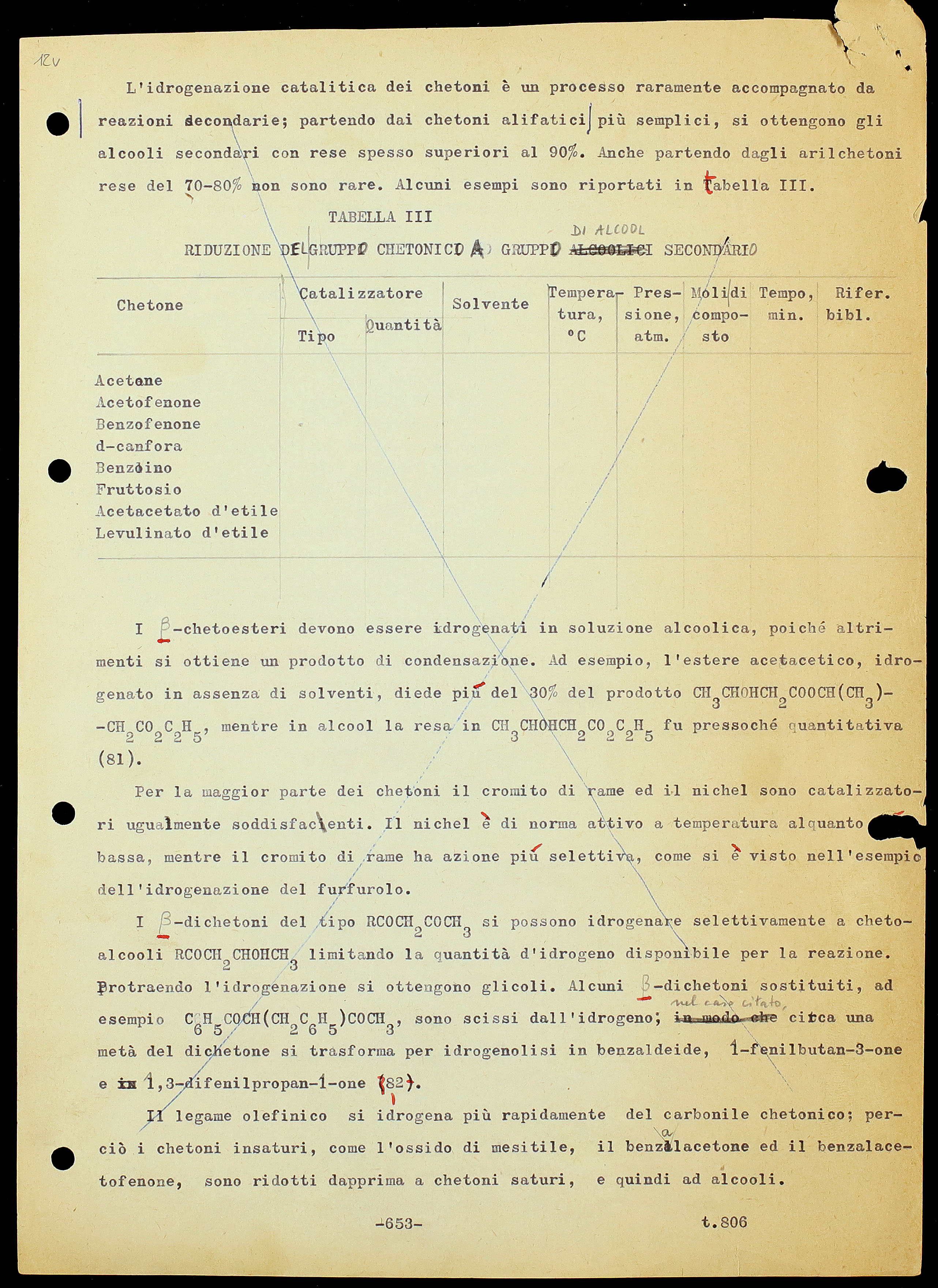
Description:typewritten letter on letterhead paper with handwritten signature in blue ballpoint pen and handwritten insertions in blue ballpoint pen by Levi. Translation by Levi (f. 12r) typewritten on recovered paper (the back of sheet 12 is a page from a draft of a chemistry manual).
Archive: Archivio privato di Primo Levi, Turin
Series: Complesso di fondi Primo Levi, Fondo Primo Levi, Corrispondenza, Corrispondenti particolari, fasc. 20, sottofasc. 1, 11r/v, 12r/v (trad.)
Folio: 1, front and back , 1 front only
Letterhead:DR. DEM. WOLFRAM ANDRÉFACHARZT FÜR INNERE MEDIZINBAD MERGENTHEIMIGERSHEIM (KR. MERGENTHEIM) AMALTER GRABEN 12 – TEL. 8711
DOI: https://doi.org/10.15160/bxyq-dk14
1“Bescheidenheit” is underlined by Levi in blue ballpoint pen and accompanied by the translation “modestia”, handwritten in blue ballpoint pen on the internal margin of the sheet.
IItalicized in the text is Primo Levi’s translation of the letter. “Io” follows, crossed out by hand in blue pencil.
II“rimango pur sempre…pericolo demoniaco” (“I remain a member… demonically dangerous things”) is underlined in red pencil.
III“personalità” (“personality”) follows, crossed out by typewriter.