
FEATURED NEWS
The Correspondence with Emil Davidovič, Rabbi Mendi of If This Is A Man, Now Online
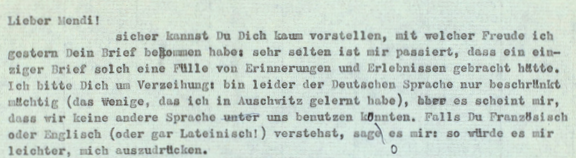
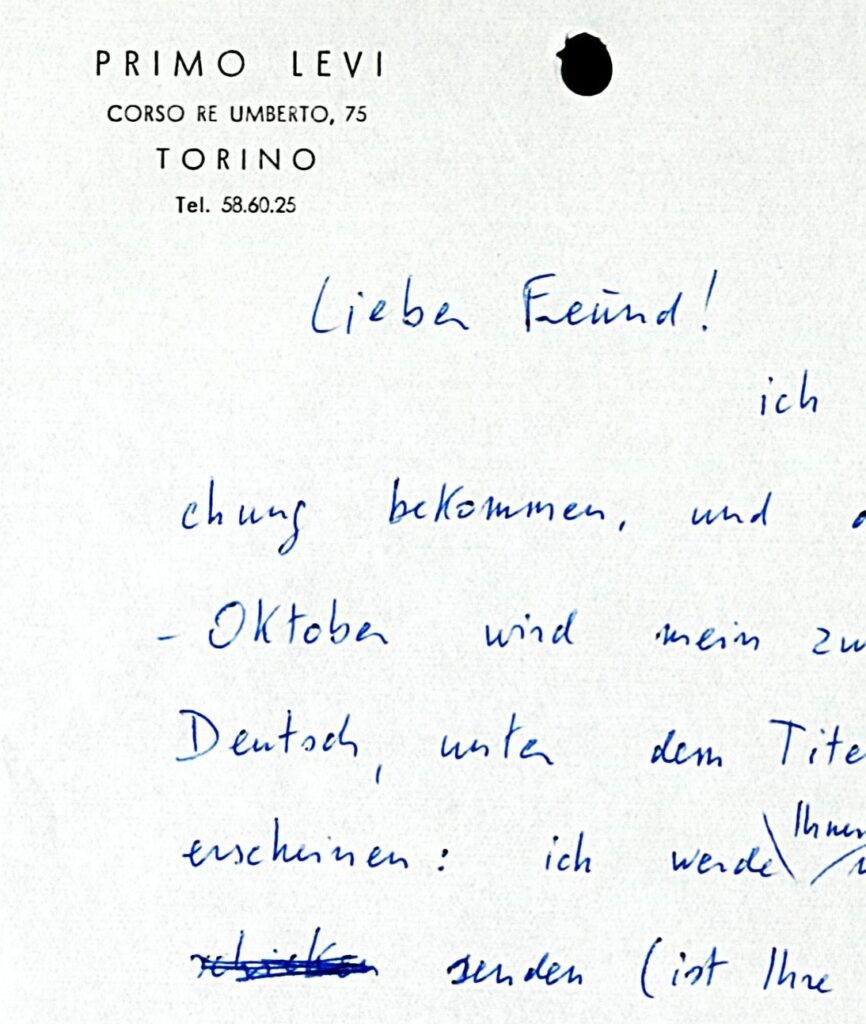
Along with the annotated bilingual edition of the correspondence between Primo Levi and Emil Davidovič, the following new publications are also available on the LeviNet portal:
- La biografia di Emil Davidovič di Simone Ghelli.
- The essay Primo Levi and the German Language by Alice Gardoncini, which analyzes Levi’s relationship with the German language in light of new findings from his correspondence with readers of Ist das ein Mensch?.
- The essay “The ‘New Swastikas’ of 1959–60 and the Besserman Effect” by Simone Ghelli, which reconstructs the impact of the antisemitic wave of 1959–60 on Levi’s works.
- The English-language edition of the correspondence with Joachim Meinert and Fred Wander, key figures in the publishing history of Se questo è un uomo in the DDR.
More information in the section Dissemination and News.
THE LETTERS
ABOUT LEVINET

In November 1986, Primo Levi participated in a conference organized by ANED in Turin, at Palazzo Lascaris; it was one of his last public appearances. On that occasion, he had two printed documents distributed among the audience. One was the chapter “Letters from Germans” from his book I sommersi e i salvati (The Drowned and the Saved), which had been published a few months earlier. In his speech, with regard to this “uninterrupted dialogue” with his readers and the questions they asked him, he wrote:
“other, I believe more interesting answers are the outcome of an intricate network of correspondence that for many years put me in contact with the German readers of If This Is a Man.”