Gertrud Mertens, corrispondente dalla Baviera, scrive di essere rimasta molto scossa dalla lettura di Ist das ein Mensch e che, con il marito, conoscevano le atrocità del Lager già prima della liberazione dei campi grazie alle testimonianze di un giovane ufficiale.
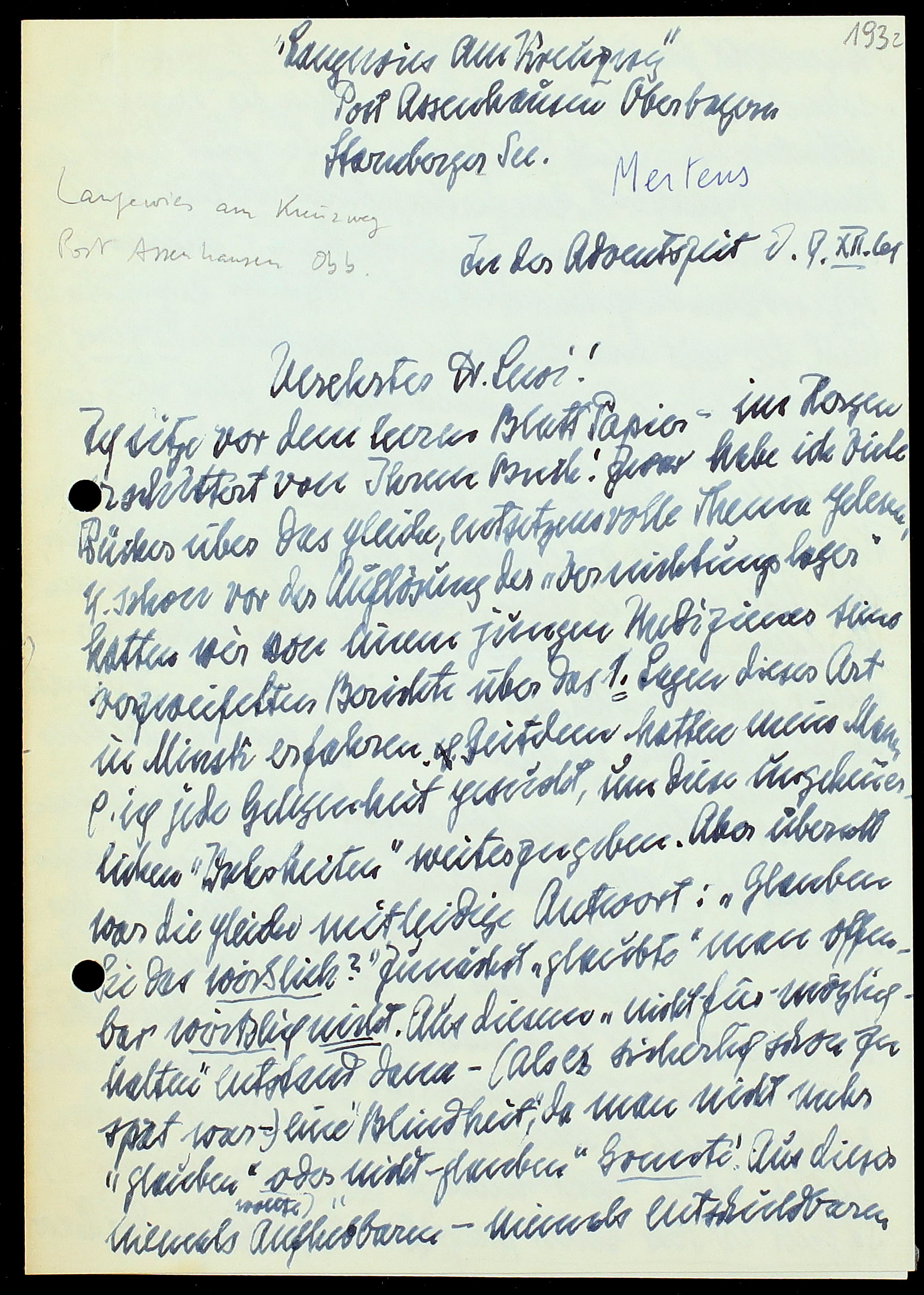
In der Adventszeit d. 9.XII.61
Langewies am Kreuzweg Post Assenhausen Oberbayern Starnberger See
Verehrter Dr. Levi!
Ich sitze vor dem leeren Blatt Papier – im Herzen erschüttert von Ihrem Buch! Zwar habe ich viele Bücher über das gleiche, entsetzensvolle Thema gelesen, und schon vor der Auflösung der „Vernichtungslager“ hatten wir von einem jungen Mediziner seine verzweifelten Berichte über das 1. Lager dieser Art in Minsk erfahren.[1] Seitdem hatten mein Mann[2] und ich jede Gelegenheit gesucht, um diese ungeheuerlichen „Wahrheiten“ weiterzugeben. Aber überall war die gleiche mitleidige Antwort: „Glauben Sie das wirklich?“ Zunächst „glaubte“ man offenbar wirklich nicht. Aus diesem „nicht-für-möglich-halten“ entstand dann – (Als es sicherlich schon zu spät war –) eine „Blindheit“[3] da man nicht mehr „glauben“ wollte[4] oder „nicht-glauben“ konnte! Aus dieser niemals aufhebbaren – niemals entschuldbaren Ohnmacht zwischen „nichtglauben-können und „schon-müssen“ entstand dann eben der „psychologische“ Selbstbetrug. (?)[5] – Auch diese Zeilen an Sie sind heut wie damals gezeichnet von der Ungeheuerlichkeit des Ausmaßes dieser niemals zu bewältigen – niemals vergessbaren Ungeheuerlichkeit. Trotzdem versuche ich heut, Sie mit dem Maaß des menschlichen Herzens zu erreichen! Meine Ergriffenheit über die ganz spezielle Art Ihrer Aussage läßt mich diese Zeilen wagen. –
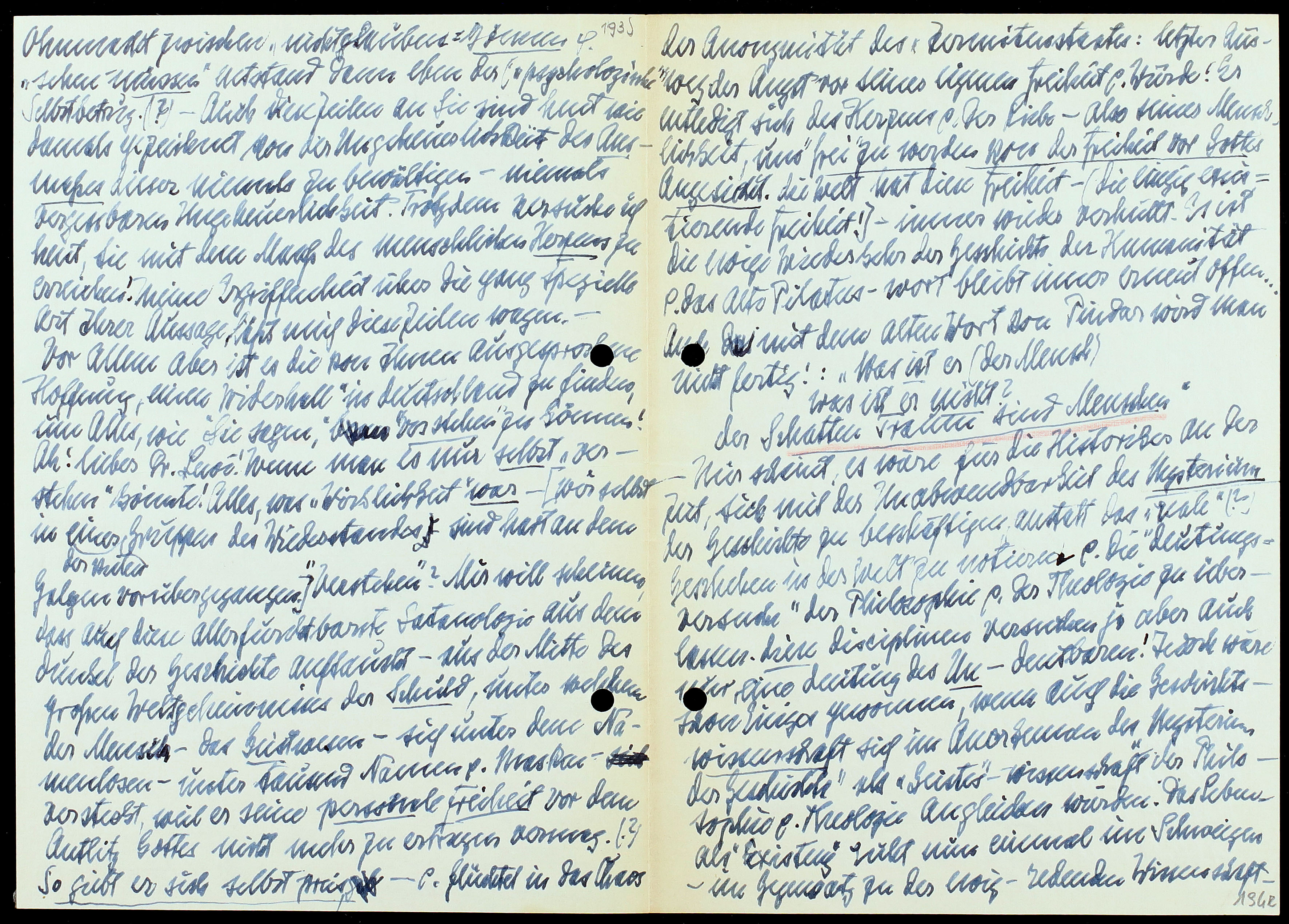
Vor allem aber ist es die von Ihnen ausgesprochene Hoffnung, einen „Widerhall“ in Deutschland zu finden, um Alles, wie Sie sagen, „verstehen“ zu können! Ah! lieber Dr. Levi! Wenn man es nur selbst „verstehen“ könnte! Alles, was „Wirklichkeit“ war – [wir selbst in einer der vielen[6] Gruppen des Widerstandes sind hart an dem Galgen vorübergegangen.][7] „Verstehen“? Mir will scheinen, dass auch diese allerfurchtbarste Satanologie[8] aus dem Dunkel der Geschichte auftaucht – aus der Mitte des Großen Weltgeheimnisses der Schuld, unter welchem der Mensch – das Geistwesen – sich unter dem Namenlosen[9] – unter tausend Namen und Masken – versteckt, weil es seine personaleFreiheit vor dem Antlitz Gottes nicht mehr zu ertragen vermag. (?) So gibt ersich selbst preis, – und flüchtet in das Chaos der Anonymität des Termitenstaates:[10] letzter Ausweg der Angst vor seiner eigenen Freiheit und Würde![11] Er entledigt sich des Herzens und der Liebe – also seiner Menschlichkeit, um „frei“ zu werden von der Freiheit vor Gottes Angesicht. Die Welt hat diese Freiheit – (die einzig existierende Freiheit!] – immer wieder verhüllt. Es ist die ewige Wiederkehr der Geschichte der Humanität und das alte Pilatus-Wort[12] bleibt immer erneut offen … Auch mit dem alten Wort von Pindar wird man nicht fertig!:
“Was ist er (der Mensch) was ist er nicht der Schatten Traum sind Menschen“[13]
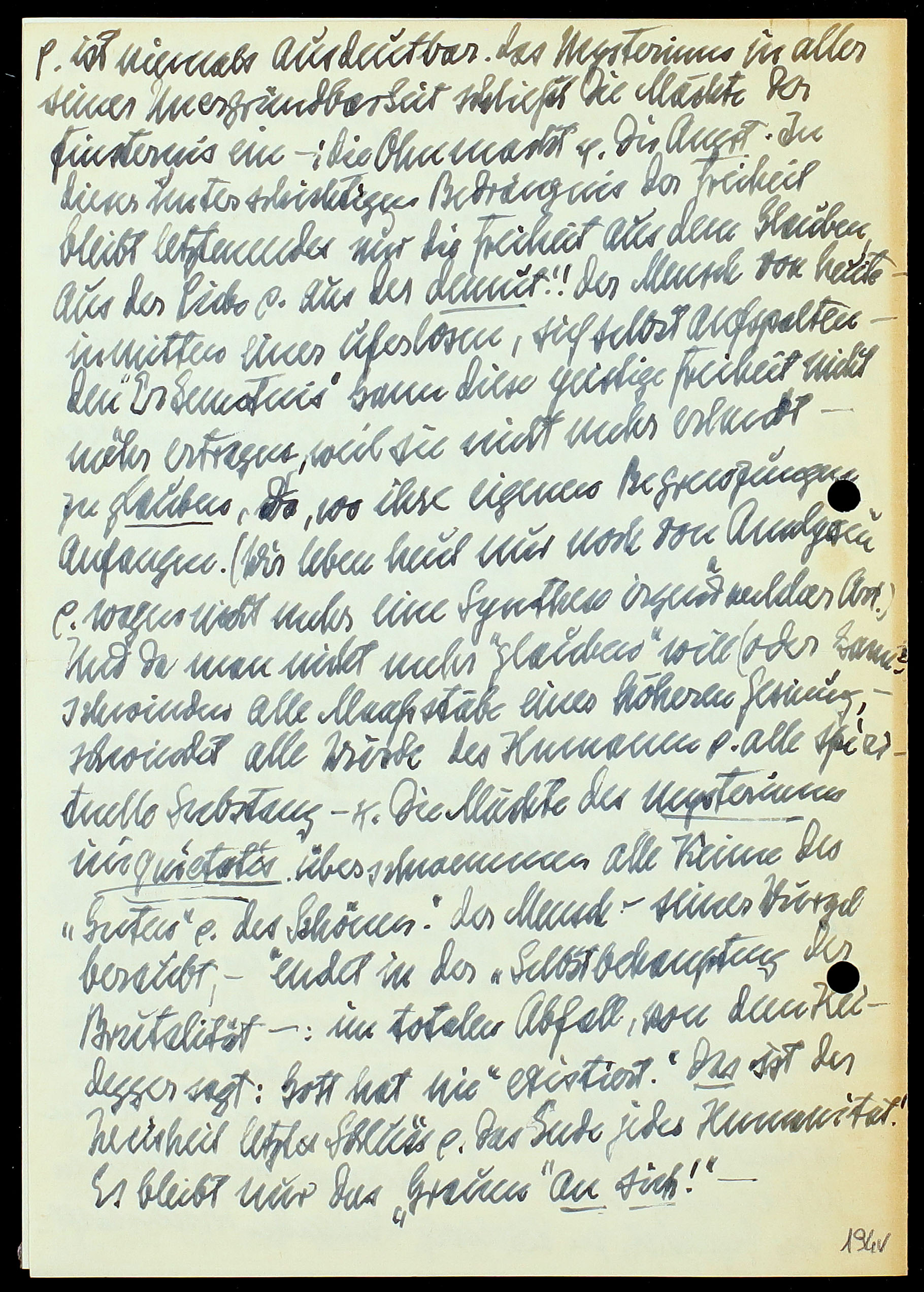
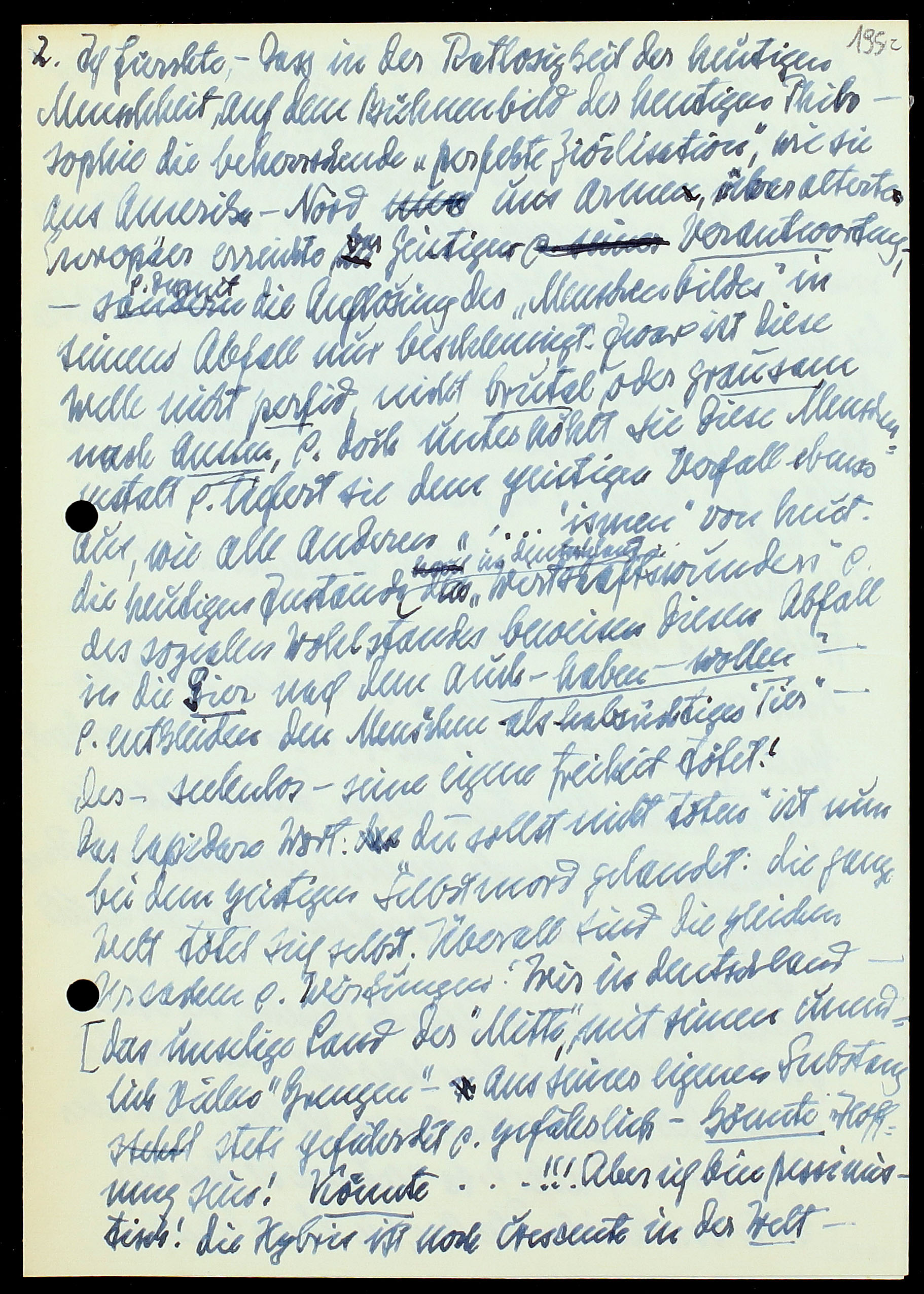
Mir scheint, es wäre für die Historiker an der Zeit, sich mit der Unabwendbarkeit des Mysteriums der Geschichte zu beschäftigen anstatt das „reale“ (?) Geschehen in der Welt zu notieren und die „Deutungsversuche“ der Philosophie und der Theologie zu überlassen. Diese Disciplinen versuchen ja aber auch unter eine Deutung des Un-deutbaren! Jedoch wäre schon Einiges gewonnen, wenn auch die Geschichtswissenschaft sich im Anerkennen des „Mysteriums der Geschichte“ als „Geistes“-wissenschaft der Philosophie und Theologie angleichen würden. Das Leben als „Existenz“ sucht nun einmal im Schweigen – im Gegensatz zu der ewig-redenden Wissenschaft – und ist niemals ausdeutbar. Das Mysterium in aller seiner Unergründbarkeit schließt die Mächte der Finsternis ein –: die Ohnmacht und die Angst. In dieser unterschichtigen Bedrängnis der Freiheit bleibt letztenendes nur die Freiheit aus dem Glauben, aus der Liebe und aus der demut!! der Mensch von heute – inmitten einer uferlosen, sich selbst aufspaltenden „Erkenntnis“ kann diese geistige Freiheit nicht mehr ertragen, weil sie nicht mehr erlaubt zu – glauben, da, wo ihre eigenen Begrenzungen anfangen. (Wir leben heut nur noch von Analysen und wagen nicht mehr eine Synthese irgendwelcher Art.) Und da man nicht mehr „glauben“ will (oder kann?), schwinden alle Maaßstäbe einer höheren Gesinnung, – schwindet alle Würde des Humanen und alle spirituelle Substanz – xxx. Die Mächte des Mysteriums iniquietatis[14] überschwemmen alle Keime des „Guten“ und des „Schönen“. Der Mensch – seiner Wurzel beraubt, -: endet in der „Selbstbehauptung der Brutalität – : im totalen Abfall, von dem Heidegger sagt: Gott hat nie „existiert.“[15]Das ist der Weisheit letzter Schluss und das Ende jeder Humanität! Es bleibt nur das „Grauen“ an sich!“ – 2. Ich fürchte, d – dass in der Ratlosigkeit der heutigen Menschheit, auf dem Bühnenbild der heutigen Philosophie die beherrschende „perfekte Zivilisation“, wie sie aus Amerika-Nord uns arme, überalterte Europäer erreichte, bar geistiger Verantwortung, – und damit die Auflösung des „Menschenbildes“ in seinem Abfall nur beschleunigt. Zwar ist diese Welle nicht perfid, nicht brutal, oder grausam nach Allem, und doch unterhöhlt sie diese Menschengestalt und liefert sie dem geistigen Verfall ebenso aus, wie alle anderen „…‘ismen“ von heut. Die heutigen Zustände in Deutschland,[16]des „Wirtschaftswunders“ und des sozialen Wohlstandes beweisen diesen Abfall in die Gier nach dem auch-haben-wollen – und entkleiden den Menschen als habsüchtiges „Tier“ – das – seelenlos – seine eigene Freiheit tötet!
Das lapidare Wort: „Du sollst nicht töten“ ist nun bei dem geistigen Selbstmord gelandet: die ganze Welt tötet sich selbst. Überall sind die gleichen Ursachen und Wirkungen!
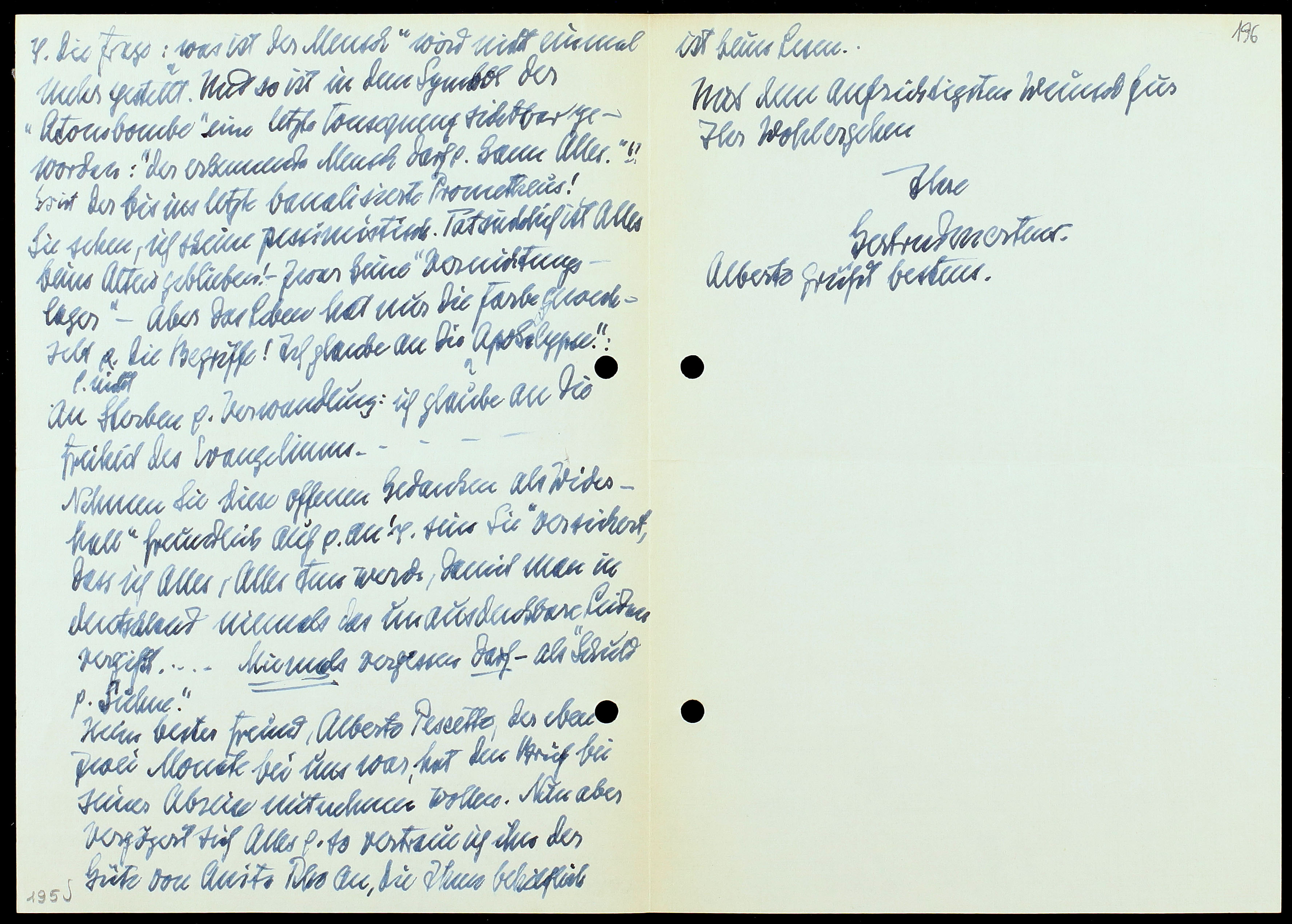
Hier in Deutschland – [das unselige Land der „Mitte“, mit seinen unendliche vielen „Grenzen“ – aus seiner eigenen Substanz stets gefährdet und gefährlich – könnte Hoffnung sein! Könnte …!!! Aber ich bin pessimistisch! Die Hybris ist noch crescente in der Welt – und die Frage: was ist der Mensch“ wird nicht einmal mehr gestellt. Nur so ist in dem Symbol der „Atombombe“ eine letzte Consequenz sichtbar geworden: „Der erkennende Mensch darf und kann alles.“ Er ist der bis ins letzte banalisierte Prometheus![17]
Sie sehen, ich scheine pessimistisch. Tatsächlich ist alles beim Alten geblieben! – Zwar keine „Vernichtungslager“ – aber das Leben hat nur die Farbe gewechselt und nicht die Begriffe! Ich glaube an die Apokalypse!!: an Sterben und Verwandlung:[18] ich glaube an die Freiheit des Evangeliums. – –
Nehmen Sie diese offenen Gedanken als Widerhall „freundlich auf und an und seien Sie“ versichert, dass ich Alles, Alles tun werde, damit man in Deutschland niemals das unausdenkbare Leiden vergisst. – – Niemals vergessen darf – als „Schuld und Sühne“.[19]
Mein bester Freund, Alberto Pescetto, der eben zwei Monate bei uns war, hat den Brief bei seiner Abreise mitnehmen wollen. Nun aber verzögert sich Alles und so vertraue ich ihn der Güte von Anita Rho an, die Ihnen behilflich ist beim Lesen.
Mit dem aufrichtigsten Wunsch für
Ihr Wohlergehen
Ihre
Gertrud Mertens.
Alberto grüßt bestens.
Nel tempo dell’Avvento, il 9.XII.61
Gertrud Mertens Langewies am Kreuzung – Post Assenhausen Obb. Starnberger See
Egregio Dr. Levi!
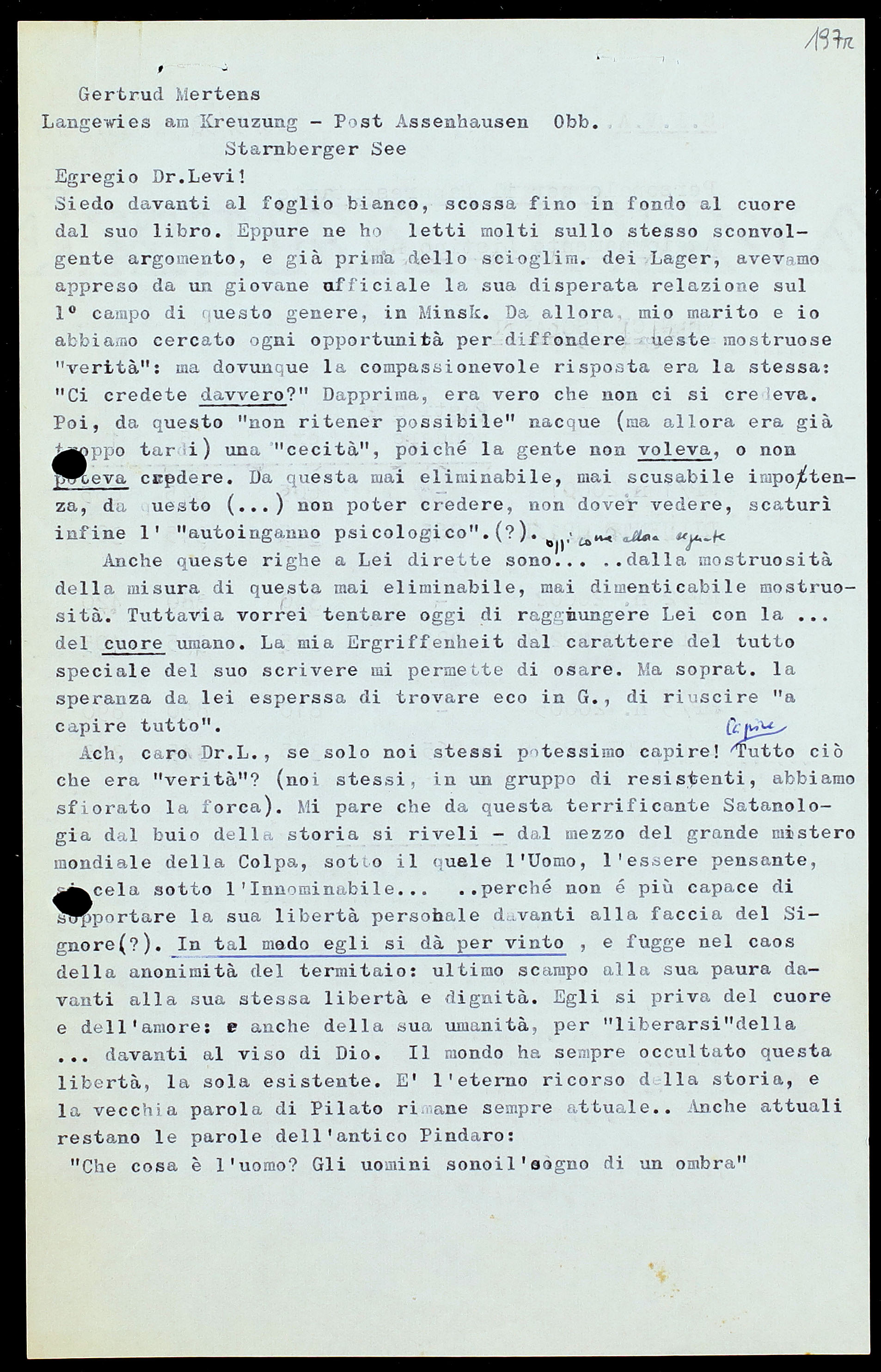
Siedo davanti al foglio bianco, scossa fino in fondo al cuore dal suo libro. Eppure ne ho letti molti sullo stesso sconvolgente argomento, e già prima dello scioglimento dei Lager, avevamo appreso da un giovane ufficiale la sua disperata relazione sul 1° campo di questo genere, in Minsk.[1] Da allora, mio marito[2] e io abbiamo cercato ogni opportunità per diffondere queste mostruose “verità”: ma dovunque la compassionevoleI risposta era la stessa: «Ci credete davvero?» Dapprima, era vero che non ci si credeva. Poi, da questo «non ritener possibile» nacque (ma allora era già troppo tardi) una «cecità»,[3] poiché la gente non voleva, o non poteva credere.[4] Da questa mai eliminabile, mai scusabile impotenza, da questo (…) non poter credere, non dover vedere, scaturì infine l’«autoinganno psicologico». (?).[5]
Anche queste righe a Lei dirette sono oggi come alloraII segnate dalla mostruosità della misura di questa mai eliminabile, mai dimenticabile mostruosità. Tuttavia vorrei tentare oggi di raggiungere Lei con la … del cuore umano. La mia ErgriffenheitIII dal carattere del tutto speciale del suo scrivere mi permette di osare. Ma soprattutto la speranza da lei espressa di trovare eco in Germania, di riuscire «a capire tutto».
Ah, caro Dr. Levi, se solo noi stessi potessimo capire! CapireIV tutto ciò che era “verità”? (noi stessi, in un gruppo dei molti [6] di resistenti, abbiamo sfiorato la forca).[7] Mi pare che da questa terrificante Satanologia[8] dal buio della storia si riveli – dal mezzo del grande mistero mondiale della Colpa, sotto il quale l’Uomo, l’essere pensante, si cela sotto l’Innominabile[9]… .. perché non è più capace di sopportare la sua libertà personale davanti alla faccia del Signore(?). In tal modo egli si dà per vinto,V e fugge nel caos della anonimità del termitaio:[10] ultimo scampo alla sua paura davanti alla sua stessa libertà e dignità.[11] Egli si priva del cuore e dell’amore: e anche della sua umanità, per “liberarsi” della … davanti al viso di Dio. Il mondo ha sempre occultato questa libertà, la sola esistente. E’ l’eterno ricorso della storia, e la vecchia parola di Pilato[12] rimane sempre attuale.. Anche attuali restano le parole dell’antico Pindaro:
“Che cosa è l’uomo? Gli uomini sono il sogno di un ombra”[13]
Mi sembra che sia giunto il momento, per gli storici, di confrontarsi con l’ineluttabilità del mistero della storia, invece di continuare a registrare gli accadimenti “reali” (?) nel mondo e lasciare i “tentativi di interpretazione” alla filosofia e alla teologia. Anche queste discipline, del resto, tentano di sottomettere a un’interpretazione l’ininterpretabile! E tuttavia si sarebbe già compiuto un passo importante se anche la storiografia, riconoscendo il “mistero della storia”, si avvicinasse, come scienza dello “spirito”, alla filosofia e alla teologia. La vita, intesa come “esistenza”, cerca nel silenzio – al contrario del parlare incessante della scienza – e non è mai del tutto interpretabile. Il mistero in tutta la sua insondabilità racchiude in sé le forze delle tenebre: l’impotenza e la paura. In questo fondo oscuro in cui la libertà è sotto assedio, alla fine la sola libertà che resta è quella che nasce dalla fede, dall’amore e dall’umiltà!! L’uomo di oggi, immerso in una “conoscenza” sterminata che si auto-disgrega, trova questa libertà interiore intollerabile, poiché non gli consente più di credere là dove la conoscenza incontra il proprio limite. (Oggi viviamo solo di analisi, e non osiamo più nessuna forma di sintesi.) E poiché non si vuole (o non si può?) più “credere”, scompaiono tutti i criteri di una moralità superiore, scompare ogni dignità dell’umano, ogni sostanza spirituale… xxx. Le forze del Mysterium iniquitatis[14] sommergono ogni germoglio di “bene” e di “bellezza”. L’uomo, privato delle sue radici, precipita nella “affermazione brutale di sé”: nel decadimento totale, di cui Heidegger dice: Dio “non è mai esistito”.[15] Ecco il traguardo della sapienza: la fine di ogni umanità! Quel che rimane è solo l’“orrore” in sé stesso. – 2. Temo che, nel disorientamento attuale dell’umanità, sul palcoscenico della filosofia contemporanea, la “civiltà perfetta” dominante, quella che ci è arrivata dagli Stati Uniti, ci abbia colti, poveri europei invecchiati, senza alcun senso di responsabilità spirituale, accelerando così la dissoluzione dell’“immagine dell’uomo” nel suo decadimento. Va detto che, tutto sommato, quest’onda non è perfida, né brutale o crudele. Eppure mina dall’interno la figura dell’uomo, consegnandola al degrado spirituale al pari di tutti gli altri “ismi” contemporanei. Le condizioni attuali della Germania,[16]il cosiddetto “miracolo economico” e il benessere sociale, sono la dimostrazione evidente di quel decadimento nell’avidità dell’anche-io-voglio-avere, e spogliano l’essere umano riducendolo a un “animale” avido, senz’anima, che uccide la propria stessa libertà.
Il lapidario comandamento “non uccidere” è oggi degenerato in suicidio spirituale: il mondo intero uccide sé stesso. Le cause e le conseguenze sono sempre le stesse, ovunque!
Qui in Germania – questa terra infelice del “centro”, con le sue infinite “frontiere”, minacciata e pericolosa nella sua sostanza stessa – potrebbe esserci una speranza. Potrebbe…!!! Ma io sono pessimista! L’hybris è ancora crescente nel mondo – e la domanda “che cos’è l’uomo?” neanche si pone più. Solo così, nel simbolo della “bomba nucleare”, si rivela un’estrema conseguenza: “L’uomo che conosce può e deve fare tutto”. È un Prometeo ridotto alla più assoluta banalità![17]
Come vede, sembro pessimista. Il realtà tutto è rimasto com’era! Certo, non ci sono più “campi di sterminio”, ma la vita ha solo cambiato colore, non significato! Io credo nell’Apocalisse!! Credo nella morte e nella trasformazione.[18] Credo nella libertà del Vangelo.
La prego di accogliere e considerare questi pensieri aperti come un “Widerhall”, un’“eco” delle sue parole. E sia “certo che farò tutto, ma proprio tutto il possibile affinché in Germania non si dimentichi mai l’indicibile sofferenza. Mai si debba dimenticare – come colpa e come espiazione”.[19]
Il mio carissimo amico Alberto Pescetto, che è stato da noi per due mesi, voleva portare con sé questa lettera alla sua partenza. Ma tutto è slittato, e così affido questo scritto alla bontà di Anita Rhoche L’aiuterà nella lettura.
Con i miei più sinceri auguri
di ogni bene
Sua
Gertrud Mertens
Alberto manda i suoi migliori saluti
During Advent, December 9, 1961
Langewies am Kreuzweg Post Assenhausen Oberbayern Starnberger See
Dear Mr. Levi!
I sit before this blank sheet of paper—my heart shaken to the core by your book! And yet I have read many books on the same horrific subject, and even before the “extermination camps” were dismantled we had heard desperate reports from a young doctor about the first camp of this kind in Minsk.[1] Ever since, my husband[2] and I had sought every opportunity to pass these monstrous “truths” on to others. But everywhere we went, we received the same compassionate response: “Do you really believe that?” At first, people obviously really did not “believe” it. This “inability to believe” then gave rise—(when it was certainly already too late—) to “blindness”[3] because people no longer wanted to “believe”[4]or were unable to “believe”! This irrevocable, inexcusable powerlessness between “not being able to believe” and “having to believe” then gave rise to “psychological” self-deception. (?)[5]—Even today, these lines to you are marked by the enormity of this never-to-be-overcome—never-to-be-forgotten atrocity. Nevertheless, today I seek to reach you with a measure of the human heart! The depth of my emotion in response to the special nature of what you have written allows me to venture writing these lines.—
Above all, however, it is your expressed hope to find a “resonance” in Germany in order to be able to “understand” everything, as you say! Ah! Dear Mr. Levi! If only one could “understand” it oneself! Everything that was “reality”—[we ourselves, in one of the many[6] resistance groups, passed hard by the gallows.][7] “Understand”? It seems to me that even this most terrible Satanology[8] emerges from the darkness of history—from the midst of the great world mystery of guilt, under which human beings—the mind and spiritual being—hides under the nameless[9]—under a thousand names and masks—because he can no longer bear his personal freedom before the face of God. (?) Thus he betrays himself—and flees into the chaos of anonymity in the ‘Termite state’:[10] the last resort of fear of his own freedom and dignity![11] He rids himself of his heart and love—that is, his humanity—in order to become “free” from the freedom before God. The world has veiled this freedom—(the only freedom that exists!]—over and over. It is the eternal return of the history of humanity, and Pilate’s old words[12] remain, again and again… Even Pindar’s old words cannot be resolved!
“What is he (man)
what is he not
man is but a dream of a shadow”[13]
It seems to me that it is time for historians to deal with the inevitability of the mystery of history instead of merely recording the “real” (?) events in the world and leaving all “attempts at interpretation” to philosophy and theology. But even these disciplines seek to interpret the uninterpretable! Nevertheless, much would be gained if the discipline of history were to align itself with philosophy and theology as a “humanities” discipline in recognizing the “mystery of history.” Life as “existence” seeks silence—in contrast to perpetually talkative science—and can never be interpreted. Mystery, in all its inscrutability, includes the powers of darkness: powerlessness and fear. In this underlying distress of freedom, ultimately only the freedom of faith, love, and humility remains! People today—in the thick of a boundless, self-dividing “knowledge”—can no longer bear this spiritual freedom, because it no longer allows them to believe where their own limitations begin. (Today, we live solely by analysis, and no longer dare to attempt any kind of synthesis.) And since people no longer want to (or can?) “believe,” all standards of higher sentiment disappear, all human dignity and spiritual substance vanish—xxx. The powers of the mystery of iniquity[14] overwhelm all seeds of “the good” and “the beautiful.” Human beings—robbed of their roots—end up in the “self-assertion of brutality”—in total apostasy, of which Heidegger says: God “never existed.”[15]That is the final word of wisdom and the end of all humanity! All that remains is “horror” itself!—2. I fear th—that in the helplessness of today’s humanity, on the stage of today’s philosophy, the dominant “perfect civilization,” as it reached us poor, old, obsolete Europeans from North America, devoid of spiritual responsibility, only accelerates the dissolution of the “image of humanity” in its apostasy. And this wave is not perfidious, brutal, or cruel, after all, yet it undermines the human form and exposes it to spiritual decay just like all the other “-isms” of the present day. The current conditions in Germany,[16] the “economic miracle” and social prosperity, prove this decline into greed for wanting to have it all—and expose human beings as grasping “animals” who—soullessly—kill their own freedom!
The succinct phrase, “Thou shalt not kill,” has ended up in spiritual suicide: the whole world is killing itself. The same causes and effects are everywhere!
Here in Germany—[the ill-fated land of the “middle,” with its countless “borders”—whose own substance renders it perennially endangered and dangerous—there could be hope! Could be…!!! But I am pessimistic! Hubris is still growing in the world—and the question “What is man?” is no longer even asked. Which is precisely how a final consequence has been rendered visible in the symbol of the “atomic bomb”: “The knowing man may and can do anything.” He is an utterly trivialized, banal Prometheus![17]
You see, I seem pessimistic. In fact, everything has remained the same!—There may be no “extermination camps” anymore—but life has merely changed color, not meaning! I believe in the apocalypse!!: in death and transformation:[18] I believe in the freedom of the Gospel.——
Please accept these candid thoughts as a friendly “resonance,” and rest “assured that I will do everything, everything in my power to ensure that people in Germany never forget the unthinkable suffering.——It must never be forgotten—as guilt and atonement.”[19]
My best friend, Alberto Pescetto, who has just spent two months with us, wanted to take the letter with him when he left. But now everything is delayed, so I entrust it to the kindness of Anita Rho, who will help you read it.
With my sincerest wishes for your well-being
Yours,
Gertrud Mertens.
Alberto sends his best regards.
In der Adventszeit d. 9.XII.61
Langewies am Kreuzweg Post Assenhausen Oberbayern Starnberger See
Verehrter Dr. Levi!
Ich sitze vor dem leeren Blatt Papier – im Herzen erschüttert von Ihrem Buch! Zwar habe ich viele Bücher über das gleiche, entsetzensvolle Thema gelesen, und schon vor der Auflösung der „Vernichtungslager“ hatten wir von einem jungen Mediziner seine verzweifelten Berichte über das 1. Lager dieser Art in Minsk erfahren.[1] Seitdem hatten mein Mann[2] und ich jede Gelegenheit gesucht, um diese ungeheuerlichen „Wahrheiten“ weiterzugeben. Aber überall war die gleiche mitleidige Antwort: „Glauben Sie das wirklich?“ Zunächst „glaubte“ man offenbar wirklich nicht. Aus diesem „nicht-für-möglich-halten“ entstand dann – (Als es sicherlich schon zu spät war –) eine „Blindheit“[3] da man nicht mehr „glauben“ wollte[4] oder „nicht-glauben“ konnte! Aus dieser niemals aufhebbaren – niemals entschuldbaren Ohnmacht zwischen „nichtglauben-können und „schon-müssen“ entstand dann eben der „psychologische“ Selbstbetrug. (?)[5] – Auch diese Zeilen an Sie sind heut wie damals gezeichnet von der Ungeheuerlichkeit des Ausmaßes dieser niemals zu bewältigen – niemals vergessbaren Ungeheuerlichkeit. Trotzdem versuche ich heut, Sie mit dem Maaß des menschlichen Herzens zu erreichen! Meine Ergriffenheit über die ganz spezielle Art Ihrer Aussage läßt mich diese Zeilen wagen. –
Vor allem aber ist es die von Ihnen ausgesprochene Hoffnung, einen „Widerhall“ in Deutschland zu finden, um Alles, wie Sie sagen, „verstehen“ zu können! Ah! lieber Dr. Levi! Wenn man es nur selbst „verstehen“ könnte! Alles, was „Wirklichkeit“ war – [wir selbst in einer der vielen[6] Gruppen des Widerstandes sind hart an dem Galgen vorübergegangen.][7] „Verstehen“? Mir will scheinen, dass auch diese allerfurchtbarste Satanologie[8] aus dem Dunkel der Geschichte auftaucht – aus der Mitte des Großen Weltgeheimnisses der Schuld, unter welchem der Mensch – das Geistwesen – sich unter dem Namenlosen[9] – unter tausend Namen und Masken – versteckt, weil es seine personaleFreiheit vor dem Antlitz Gottes nicht mehr zu ertragen vermag. (?) So gibt ersich selbst preis, – und flüchtet in das Chaos der Anonymität des Termitenstaates:[10] letzter Ausweg der Angst vor seiner eigenen Freiheit und Würde![11] Er entledigt sich des Herzens und der Liebe – also seiner Menschlichkeit, um „frei“ zu werden von der Freiheit vor Gottes Angesicht. Die Welt hat diese Freiheit – (die einzig existierende Freiheit!] – immer wieder verhüllt. Es ist die ewige Wiederkehr der Geschichte der Humanität und das alte Pilatus-Wort[12] bleibt immer erneut offen … Auch mit dem alten Wort von Pindar wird man nicht fertig!:
“Was ist er (der Mensch) was ist er nicht der Schatten Traum sind Menschen“[13]
Mir scheint, es wäre für die Historiker an der Zeit, sich mit der Unabwendbarkeit des Mysteriums der Geschichte zu beschäftigen anstatt das „reale“ (?) Geschehen in der Welt zu notieren und die „Deutungsversuche“ der Philosophie und der Theologie zu überlassen. Diese Disciplinen versuchen ja aber auch unter eine Deutung des Un-deutbaren! Jedoch wäre schon Einiges gewonnen, wenn auch die Geschichtswissenschaft sich im Anerkennen des „Mysteriums der Geschichte“ als „Geistes“-wissenschaft der Philosophie und Theologie angleichen würden. Das Leben als „Existenz“ sucht nun einmal im Schweigen – im Gegensatz zu der ewig-redenden Wissenschaft – und ist niemals ausdeutbar. Das Mysterium in aller seiner Unergründbarkeit schließt die Mächte der Finsternis ein –: die Ohnmacht und die Angst. In dieser unterschichtigen Bedrängnis der Freiheit bleibt letztenendes nur die Freiheit aus dem Glauben, aus der Liebe und aus der demut!! der Mensch von heute – inmitten einer uferlosen, sich selbst aufspaltenden „Erkenntnis“ kann diese geistige Freiheit nicht mehr ertragen, weil sie nicht mehr erlaubt zu – glauben, da, wo ihre eigenen Begrenzungen anfangen. (Wir leben heut nur noch von Analysen und wagen nicht mehr eine Synthese irgendwelcher Art.) Und da man nicht mehr „glauben“ will (oder kann?), schwinden alle Maaßstäbe einer höheren Gesinnung, – schwindet alle Würde des Humanen und alle spirituelle Substanz – xxx. Die Mächte des Mysteriums iniquietatis[14] überschwemmen alle Keime des „Guten“ und des „Schönen“. Der Mensch – seiner Wurzel beraubt, -: endet in der „Selbstbehauptung der Brutalität – : im totalen Abfall, von dem Heidegger sagt: Gott hat nie „existiert.“[15]Das ist der Weisheit letzter Schluss und das Ende jeder Humanität! Es bleibt nur das „Grauen“ an sich!“ – 2. Ich fürchte, d – dass in der Ratlosigkeit der heutigen Menschheit, auf dem Bühnenbild der heutigen Philosophie die beherrschende „perfekte Zivilisation“, wie sie aus Amerika-Nord uns arme, überalterte Europäer erreichte, bar geistiger Verantwortung, – und damit die Auflösung des „Menschenbildes“ in seinem Abfall nur beschleunigt. Zwar ist diese Welle nicht perfid, nicht brutal, oder grausam nach Allem, und doch unterhöhlt sie diese Menschengestalt und liefert sie dem geistigen Verfall ebenso aus, wie alle anderen „…‘ismen“ von heut. Die heutigen Zustände in Deutschland,[16]des „Wirtschaftswunders“ und des sozialen Wohlstandes beweisen diesen Abfall in die Gier nach dem auch-haben-wollen – und entkleiden den Menschen als habsüchtiges „Tier“ – das – seelenlos – seine eigene Freiheit tötet!
Das lapidare Wort: „Du sollst nicht töten“ ist nun bei dem geistigen Selbstmord gelandet: die ganze Welt tötet sich selbst. Überall sind die gleichen Ursachen und Wirkungen!
Hier in Deutschland – [das unselige Land der „Mitte“, mit seinen unendliche vielen „Grenzen“ – aus seiner eigenen Substanz stets gefährdet und gefährlich – könnte Hoffnung sein! Könnte …!!! Aber ich bin pessimistisch! Die Hybris ist noch crescente in der Welt – und die Frage: was ist der Mensch“ wird nicht einmal mehr gestellt. Nur so ist in dem Symbol der „Atombombe“ eine letzte Consequenz sichtbar geworden: „Der erkennende Mensch darf und kann alles.“ Er ist der bis ins letzte banalisierte Prometheus![17]
Sie sehen, ich scheine pessimistisch. Tatsächlich ist alles beim Alten geblieben! – Zwar keine „Vernichtungslager“ – aber das Leben hat nur die Farbe gewechselt und nicht die Begriffe! Ich glaube an die Apokalypse!!: an Sterben und Verwandlung:[18] ich glaube an die Freiheit des Evangeliums. – –
Nehmen Sie diese offenen Gedanken als Widerhall „freundlich auf und an und seien Sie“ versichert, dass ich Alles, Alles tun werde, damit man in Deutschland niemals das unausdenkbare Leiden vergisst. – – Niemals vergessen darf – als „Schuld und Sühne“.[19]
Mein bester Freund, Alberto Pescetto, der eben zwei Monate bei uns war, hat den Brief bei seiner Abreise mitnehmen wollen. Nun aber verzögert sich Alles und so vertraue ich ihn der Güte von Anita Rho an, die Ihnen behilflich ist beim Lesen.
Mit dem aufrichtigsten Wunsch für
Ihr Wohlergehen
Ihre
Gertrud Mertens.
Alberto grüßt bestens.
Nel tempo dell’Avvento, il 9.XII.61
Gertrud Mertens Langewies am Kreuzung – Post Assenhausen Obb. Starnberger See
Egregio Dr. Levi!
Siedo davanti al foglio bianco, scossa fino in fondo al cuore dal suo libro. Eppure ne ho letti molti sullo stesso sconvolgente argomento, e già prima dello scioglimento dei Lager, avevamo appreso da un giovane ufficiale la sua disperata relazione sul 1° campo di questo genere, in Minsk.[1] Da allora, mio marito[2] e io abbiamo cercato ogni opportunità per diffondere queste mostruose “verità”: ma dovunque la compassionevoleI risposta era la stessa: «Ci credete davvero?» Dapprima, era vero che non ci si credeva. Poi, da questo «non ritener possibile» nacque (ma allora era già troppo tardi) una «cecità»,[3] poiché la gente non voleva, o non poteva credere.[4] Da questa mai eliminabile, mai scusabile impotenza, da questo (…) non poter credere, non dover vedere, scaturì infine l’«autoinganno psicologico». (?).[5]
Anche queste righe a Lei dirette sono oggi come alloraII segnate dalla mostruosità della misura di questa mai eliminabile, mai dimenticabile mostruosità. Tuttavia vorrei tentare oggi di raggiungere Lei con la … del cuore umano. La mia ErgriffenheitIII dal carattere del tutto speciale del suo scrivere mi permette di osare. Ma soprattutto la speranza da lei espressa di trovare eco in Germania, di riuscire «a capire tutto».
Ah, caro Dr. Levi, se solo noi stessi potessimo capire! CapireIV tutto ciò che era “verità”? (noi stessi, in un gruppo dei molti [6] di resistenti, abbiamo sfiorato la forca).[7] Mi pare che da questa terrificante Satanologia[8] dal buio della storia si riveli – dal mezzo del grande mistero mondiale della Colpa, sotto il quale l’Uomo, l’essere pensante, si cela sotto l’Innominabile[9]… .. perché non è più capace di sopportare la sua libertà personale davanti alla faccia del Signore(?). In tal modo egli si dà per vinto,V e fugge nel caos della anonimità del termitaio:[10] ultimo scampo alla sua paura davanti alla sua stessa libertà e dignità.[11] Egli si priva del cuore e dell’amore: e anche della sua umanità, per “liberarsi” della … davanti al viso di Dio. Il mondo ha sempre occultato questa libertà, la sola esistente. E’ l’eterno ricorso della storia, e la vecchia parola di Pilato[12] rimane sempre attuale.. Anche attuali restano le parole dell’antico Pindaro:
“Che cosa è l’uomo? Gli uomini sono il sogno di un ombra”[13]
Mi sembra che sia giunto il momento, per gli storici, di confrontarsi con l’ineluttabilità del mistero della storia, invece di continuare a registrare gli accadimenti “reali” (?) nel mondo e lasciare i “tentativi di interpretazione” alla filosofia e alla teologia. Anche queste discipline, del resto, tentano di sottomettere a un’interpretazione l’ininterpretabile! E tuttavia si sarebbe già compiuto un passo importante se anche la storiografia, riconoscendo il “mistero della storia”, si avvicinasse, come scienza dello “spirito”, alla filosofia e alla teologia. La vita, intesa come “esistenza”, cerca nel silenzio – al contrario del parlare incessante della scienza – e non è mai del tutto interpretabile. Il mistero in tutta la sua insondabilità racchiude in sé le forze delle tenebre: l’impotenza e la paura. In questo fondo oscuro in cui la libertà è sotto assedio, alla fine la sola libertà che resta è quella che nasce dalla fede, dall’amore e dall’umiltà!! L’uomo di oggi, immerso in una “conoscenza” sterminata che si auto-disgrega, trova questa libertà interiore intollerabile, poiché non gli consente più di credere là dove la conoscenza incontra il proprio limite. (Oggi viviamo solo di analisi, e non osiamo più nessuna forma di sintesi.) E poiché non si vuole (o non si può?) più “credere”, scompaiono tutti i criteri di una moralità superiore, scompare ogni dignità dell’umano, ogni sostanza spirituale… xxx. Le forze del Mysterium iniquitatis[14] sommergono ogni germoglio di “bene” e di “bellezza”. L’uomo, privato delle sue radici, precipita nella “affermazione brutale di sé”: nel decadimento totale, di cui Heidegger dice: Dio “non è mai esistito”.[15] Ecco il traguardo della sapienza: la fine di ogni umanità! Quel che rimane è solo l’“orrore” in sé stesso. – 2. Temo che, nel disorientamento attuale dell’umanità, sul palcoscenico della filosofia contemporanea, la “civiltà perfetta” dominante, quella che ci è arrivata dagli Stati Uniti, ci abbia colti, poveri europei invecchiati, senza alcun senso di responsabilità spirituale, accelerando così la dissoluzione dell’“immagine dell’uomo” nel suo decadimento. Va detto che, tutto sommato, quest’onda non è perfida, né brutale o crudele. Eppure mina dall’interno la figura dell’uomo, consegnandola al degrado spirituale al pari di tutti gli altri “ismi” contemporanei. Le condizioni attuali della Germania,[16]il cosiddetto “miracolo economico” e il benessere sociale, sono la dimostrazione evidente di quel decadimento nell’avidità dell’anche-io-voglio-avere, e spogliano l’essere umano riducendolo a un “animale” avido, senz’anima, che uccide la propria stessa libertà.
Il lapidario comandamento “non uccidere” è oggi degenerato in suicidio spirituale: il mondo intero uccide sé stesso. Le cause e le conseguenze sono sempre le stesse, ovunque!
Qui in Germania – questa terra infelice del “centro”, con le sue infinite “frontiere”, minacciata e pericolosa nella sua sostanza stessa – potrebbe esserci una speranza. Potrebbe…!!! Ma io sono pessimista! L’hybris è ancora crescente nel mondo – e la domanda “che cos’è l’uomo?” neanche si pone più. Solo così, nel simbolo della “bomba nucleare”, si rivela un’estrema conseguenza: “L’uomo che conosce può e deve fare tutto”. È un Prometeo ridotto alla più assoluta banalità![17]
Come vede, sembro pessimista. Il realtà tutto è rimasto com’era! Certo, non ci sono più “campi di sterminio”, ma la vita ha solo cambiato colore, non significato! Io credo nell’Apocalisse!! Credo nella morte e nella trasformazione.[18] Credo nella libertà del Vangelo.
La prego di accogliere e considerare questi pensieri aperti come un “Widerhall”, un’“eco” delle sue parole. E sia “certo che farò tutto, ma proprio tutto il possibile affinché in Germania non si dimentichi mai l’indicibile sofferenza. Mai si debba dimenticare – come colpa e come espiazione”.[19]
Il mio carissimo amico Alberto Pescetto, che è stato da noi per due mesi, voleva portare con sé questa lettera alla sua partenza. Ma tutto è slittato, e così affido questo scritto alla bontà di Anita Rhoche L’aiuterà nella lettura.
Con i miei più sinceri auguri
di ogni bene
Sua
Gertrud Mertens
Alberto manda i suoi migliori saluti
During Advent, December 9, 1961
Langewies am Kreuzweg Post Assenhausen Oberbayern Starnberger See
Dear Mr. Levi!
I sit before this blank sheet of paper—my heart shaken to the core by your book! And yet I have read many books on the same horrific subject, and even before the “extermination camps” were dismantled we had heard desperate reports from a young doctor about the first camp of this kind in Minsk.[1] Ever since, my husband[2] and I had sought every opportunity to pass these monstrous “truths” on to others. But everywhere we went, we received the same compassionate response: “Do you really believe that?” At first, people obviously really did not “believe” it. This “inability to believe” then gave rise—(when it was certainly already too late—) to “blindness”[3] because people no longer wanted to “believe”[4]or were unable to “believe”! This irrevocable, inexcusable powerlessness between “not being able to believe” and “having to believe” then gave rise to “psychological” self-deception. (?)[5]—Even today, these lines to you are marked by the enormity of this never-to-be-overcome—never-to-be-forgotten atrocity. Nevertheless, today I seek to reach you with a measure of the human heart! The depth of my emotion in response to the special nature of what you have written allows me to venture writing these lines.—
Above all, however, it is your expressed hope to find a “resonance” in Germany in order to be able to “understand” everything, as you say! Ah! Dear Mr. Levi! If only one could “understand” it oneself! Everything that was “reality”—[we ourselves, in one of the many[6] resistance groups, passed hard by the gallows.][7] “Understand”? It seems to me that even this most terrible Satanology[8] emerges from the darkness of history—from the midst of the great world mystery of guilt, under which human beings—the mind and spiritual being—hides under the nameless[9]—under a thousand names and masks—because he can no longer bear his personal freedom before the face of God. (?) Thus he betrays himself—and flees into the chaos of anonymity in the ‘Termite state’:[10] the last resort of fear of his own freedom and dignity![11] He rids himself of his heart and love—that is, his humanity—in order to become “free” from the freedom before God. The world has veiled this freedom—(the only freedom that exists!]—over and over. It is the eternal return of the history of humanity, and Pilate’s old words[12] remain, again and again… Even Pindar’s old words cannot be resolved!
“What is he (man)
what is he not
man is but a dream of a shadow”[13]
It seems to me that it is time for historians to deal with the inevitability of the mystery of history instead of merely recording the “real” (?) events in the world and leaving all “attempts at interpretation” to philosophy and theology. But even these disciplines seek to interpret the uninterpretable! Nevertheless, much would be gained if the discipline of history were to align itself with philosophy and theology as a “humanities” discipline in recognizing the “mystery of history.” Life as “existence” seeks silence—in contrast to perpetually talkative science—and can never be interpreted. Mystery, in all its inscrutability, includes the powers of darkness: powerlessness and fear. In this underlying distress of freedom, ultimately only the freedom of faith, love, and humility remains! People today—in the thick of a boundless, self-dividing “knowledge”—can no longer bear this spiritual freedom, because it no longer allows them to believe where their own limitations begin. (Today, we live solely by analysis, and no longer dare to attempt any kind of synthesis.) And since people no longer want to (or can?) “believe,” all standards of higher sentiment disappear, all human dignity and spiritual substance vanish—xxx. The powers of the mystery of iniquity[14] overwhelm all seeds of “the good” and “the beautiful.” Human beings—robbed of their roots—end up in the “self-assertion of brutality”—in total apostasy, of which Heidegger says: God “never existed.”[15]That is the final word of wisdom and the end of all humanity! All that remains is “horror” itself!—2. I fear th—that in the helplessness of today’s humanity, on the stage of today’s philosophy, the dominant “perfect civilization,” as it reached us poor, old, obsolete Europeans from North America, devoid of spiritual responsibility, only accelerates the dissolution of the “image of humanity” in its apostasy. And this wave is not perfidious, brutal, or cruel, after all, yet it undermines the human form and exposes it to spiritual decay just like all the other “-isms” of the present day. The current conditions in Germany,[16] the “economic miracle” and social prosperity, prove this decline into greed for wanting to have it all—and expose human beings as grasping “animals” who—soullessly—kill their own freedom!
The succinct phrase, “Thou shalt not kill,” has ended up in spiritual suicide: the whole world is killing itself. The same causes and effects are everywhere!
Here in Germany—[the ill-fated land of the “middle,” with its countless “borders”—whose own substance renders it perennially endangered and dangerous—there could be hope! Could be…!!! But I am pessimistic! Hubris is still growing in the world—and the question “What is man?” is no longer even asked. Which is precisely how a final consequence has been rendered visible in the symbol of the “atomic bomb”: “The knowing man may and can do anything.” He is an utterly trivialized, banal Prometheus![17]
You see, I seem pessimistic. In fact, everything has remained the same!—There may be no “extermination camps” anymore—but life has merely changed color, not meaning! I believe in the apocalypse!!: in death and transformation:[18] I believe in the freedom of the Gospel.——
Please accept these candid thoughts as a friendly “resonance,” and rest “assured that I will do everything, everything in my power to ensure that people in Germany never forget the unthinkable suffering.——It must never be forgotten—as guilt and atonement.”[19]
My best friend, Alberto Pescetto, who has just spent two months with us, wanted to take the letter with him when he left. But now everything is delayed, so I entrust it to the kindness of Anita Rho, who will help you read it.
With my sincerest wishes for your well-being
Yours,
Gertrud Mertens.
Alberto sends his best regards.
Info
Note
Tag
Mittente: Gertrud Körber-Mertens
Destinatario: Primo Levi
Data di stesura: 1961-12-09
Luogo di stesura: Lago di Starnberg
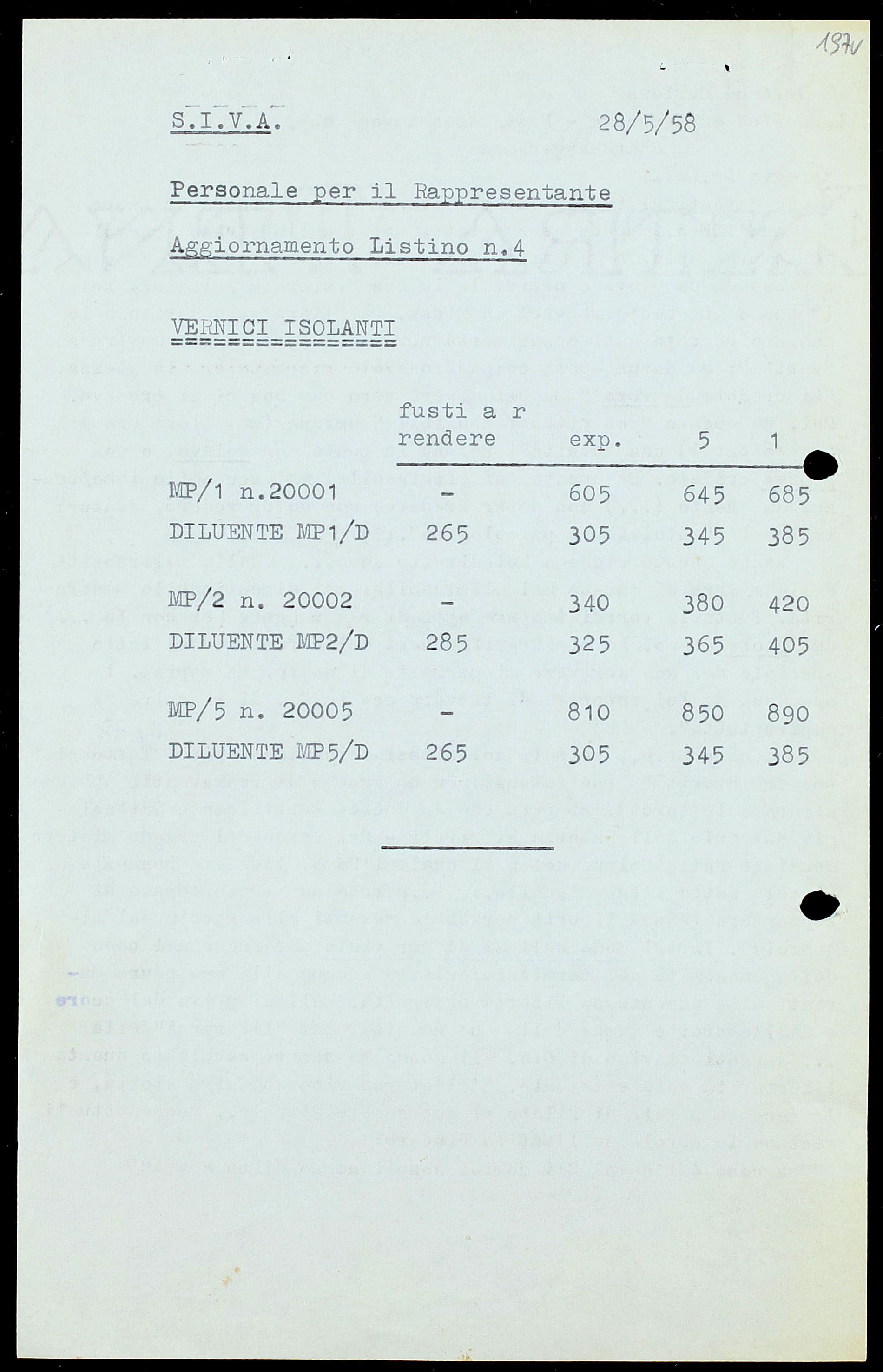
Descrizione del documento:lettera ms. a stilografica blu su foglio bianco A4 (mm295x210 piegati). Sotto l’intestazione Levi inserisce due inserti ms.: a destra, è ms. a matita «Langewies am Kreuzweg | Post Assenhausen Obb.», a sinistra, è ms. a biro blu: «Mertens». Traduzione di Levi (f. 197) ds. su carta di riciclo con inserti ms. a biro blu e stilografica nera; il verso del foglio 197 presenta un aggiornamento del listino delle vernici isolanti per la SIVA datato 28/05/58 (mm 156x246).
Archivio: Archivio privato di Primo Levi, Torino
Segnatura: Complesso di fondi Primo Levi, Fondo Primo Levi, Corrispondenza, Corrispondenti particolari, Fasc.020, sottofasc. 001, doc. doc. 67, ff. 193r/v, 194r/v, 195r/v, 196, 197r/v (trad.)
Fogli: 3, recto e verso, 2 solo recto
DOI:
1Si tratta del campo di concentramento di Malyj Trostenec (Minsk).
3Matteo 13, 14-15: «E così si adempie per loro la profezia di Isaia che dice: Voi udrete, ma non comprenderete, guarderete, ma non vedrete. Perché il cuore di questo popolo si è indurito, son diventati duri di orecchi, e hanno chiuso gli occhi, per non vedere con gli occhi, non sentire con gli orecchi e non intendere con il cuore e convertirsi, e io li risani». Nel capitolo «I sommersi e i salvati» di Se questo è un uomo, Primo Levi cita esattamente il versetto di poco precedente (Matteo 13, 12). «Nella storia e nella vita pare talvolta di discernere una legge feroce, che suona “a chi ha, sarà dato; a chi non ha, a quello sarà tolto”» (OC I, p. 207).
4«wollte» è aggiunto tramite un segno di serpentina sotto il rigo.
5QuiMertens paragrafa un passaggio tratto dal capitolo «La colpa morale» [Die moralische Schuld] del saggio del 1946 La questione della colpa [Die Schuldfrage]di Karl Jaspers.Scrive Jaspers: «Anche per chi doveva rassegnarsi nella sua impotenza, rimaneva sempre lo spazio per qualche efficace attività, prendendo ogni cautela e correndo qualche rischio. Nel fatto che per paura si è trascurato di farlo, ciascuno riconoscerà la propria colpa morale: l’essere rimasti ciechi di fronte alla sventura degli altri, questa specie di mancanza di immaginazione da parte del cuore e il non sentirsi interiormente colpiti da quelle sofferenze che si avevano innanzi agli occhi [Blindheit]», cfr. K. Jaspers, La questione della colpa. Sulla responsabilità politica della Germania, Raffaello Cortina, Milano 1966, pp. 71-72. Poche righe prima, Jaspers tratta anche il tema dell’autoinganno psicologico: «Parecchi si abbandonavano comodamente all’autoillusione [Selbsttäuschung]: assicuravano che avrebbero senz’altro cambiato questo regime sciagurato, che il partito sarebbe sparito, al più tardi, con la morte del Fuhrer. Per il momento bisognava dare una mano a indirizzare dall’interno la cosa al bene» (p. 68).
6«der vielen» è aggiunto tramite un segno di serpentina sotto il rigo.
7Mertens allude alla condanna a morte per ghigliottina dei membri della Rosa Bianca, gruppo resistente monacense, la cui azione si definì nel giugno del 1942 nel corso di due serate letterarie da lei organizzate nel suo appartamento di Monaco, cfr. la biografia di Gertrud Mertens. Levi farà riferimento al «gruppo di religiosi» della Rosa Bianca in un'intervista del 1978 con Marco Viglino del 1978 (OC III, p. 920). A questa esperienza della resistenza tedesca alluderà nuovamente nella conversazione con Ferdinando Camon avvenuta tra il 1982 e il 1986 (OC III, p. 833). Al momento della ricezione della lettera di Mertens nel 1961, era già disponibile in Italia la traduzione La rosa bianca di Inge Scholl, pubblicato da La Nuova Italia nel 1959. Il titolo uscì nella collana "Biblioteca Leone Ginzburg", la stessa in cui De Silva (acquisita da La Nuova Italia nel 1948) pubblicò Se questo è un uomo nel 1947.
8Ne La questione della colpa, Jaspers definisce il nazismo come Teufelei («diavolerie») oppure come teuflische Organisation, «organizzazione diabolica», cfr. K. Jaspers, La questione della colpa. Sulla responsabilità politica della Germania, Raffaello Cortina, Milano 1966, pp. 101-10. In queste pagine, Jaspers mutua l’aggettivo «satanico» dal saggio del 1945 Die Deutsche Frage [Il problema della Germania] dell’economista Wilhelm Röpke. Levi fa riferimento a questi passaggi della Questione della colpa di Jaspers nel saggio Testimonianza per Eichmann, apparso su «Il Ponte» nell’aprile del 1961 (OC II, pp. 1314-15).
9Il riferimento qui è a Esodo 3, 13-14: «Mosè disse a Dio: “Ecco io arrivo dagli Israeliti e dico loro: Il Dio dei vostri padri mi ha mandato a voi. Ma mi diranno: Come si chiama? E io che cosa risponderò loro? Dio disse a Mosè: “Io sono colui che sono!”. Poi disse: “Dirai agli Israeliti: Io-Sono mi ha mandato a voi”». Il Dio Innominabile di Esodo 3-14 è alla base della teologia negativa. In area tedesca, l’elaborazione più influente è stata quella di Meister Eckhart, teologo e mistico del XIV secolo, la cui opera sarà fonte di ispirazione per la riflessione tardo ottocentesca e novecentesca sulla totale alterità di Dio e i limiti del potere affermativo della ragione umana. Tale tradizione trova espressione in pensatori come Schelling, Schopenhauer, Kierkegaard, Karl Barth, Erich Przywara e Martin Heidegger, tutti autori che costituiscono l’orizzonte semantico e concettuale che fa da sfondo alla lettera di Gertrud Mertens.
10«Stato termitaio», locuzione dietro alla quale è ravvisabile la commistione tra biologia e sociologia tipica della riflessione politica del tardo Ottocento e del primo Novecento. Utilizzato in chiave polemica per denunciare l’oppressione e la spersonalizzazione delle società iper-organizzate, il termine avrà ampia diffusione all’interno della letteratura distopica, come L’impero delle formiche (1905) di H.G. Wells e Il mondo nuovo (1932)di Aldous Huxley. L’immagine dello stato termitaio è rintracciabile inoltre nelle critiche alla società moderna elaborate in seno al Renouveau catholique, orizzonte culturale di riferimento nella formazione intellettuale di Gertrud Mertens, cfr. la questione del «rinnovamento religioso» [religiöse Erneuerung] nella biografia di Gertrud Mertens.
11Mertens allude qui alla Leggenda del Grande Inquisitore nei Fratelli Karamazov di Dostoevskij. Dinanzi al Cristo silente e incarcerato, l’Inquisitore afferma:«Accettando [il gladio di Cesare] avresti esaudito ogni richiesta degli uomini su questa terra, vale a dire: qualcuno da venerare, qualcuno a cui affidare la propria coscienza, e come radunarsi tutti quanti, finalmente, in un unico formicaio comune e concorde», cfr. F. Dostoevskij, I fratelli Karamazov, Einaudi, Torino 2021, p. 330.
12Giovanni 18, 37-38: «Allora Pilato gli disse: “Dunque tu sei re?”. Rispose Gesù: “Tu lo dici; io sono re. Per questo io sono nato e per questo sono venuto nel mondo: per rendere testimonianza alla verità. Chiunque è dalla verità, ascolta la mia voce”. Gli dice Pilato: “Che cos’è la verità?”».
13«Schatten Traum sind Menschen» è sottolineato da Mertens, e anche da Levi a matita rossa.
14Così Paolo di Tarso nella seconda lettera ai Tessalonicesi in merito alla venuta dell’Anticristo: «Il mistero dell’iniquità è già in atto, ma è necessario che sia tolto di mezzo chi finora lo trattiene. Solo allora sarà rivelato l’empio e il Signore Gesù lo distruggerà con il soffio della sua bocca e lo annienterà all’apparire della sua venuta, l’iniquo, la cui venuta avverrà nella potenza di satana, con ogni specie di portenti, di segni e prodigi menzogneri, e con ogni sorta di empio inganno per quelli che vanno in rovina perché non hanno accolto l’amore della verità per essere salvi» (2Ts 2,7-10).
15Così Heidegger nel celebre discorso di accettazione del rettorato del 1933, (Selbstbehauptung der deutschen Universität): «E se il nostro più proprio esserci si trova davanti a un mutamento grandioso, se è vero ciò che ha detto l’ultimo filosofo tedesco che appassionatamente ha cercato Dio nel dolore, F. Nietzsche: “Dio è morto” – se noi non possiamo esimerci dal compito di prendere sul serio questa solitudine dell’uomo d’oggi nel cuore dell’essere, in quale situazione si trova la scienza»? Cfr. M. Heidegger, “L’autoaffermazione dell’università tedesca”, in Discorsi e altre testimonianze del cammino di una vita 1910-1976, il melangolo, Genova 2025, p. 105. La citazione di Heidegger, unitamente a un registro discorsivo che combina temi biblici e nozioni della filosofia idealista (il «fondo oscura della libertà» di Schelling), fanno pensare a una lettura in chiave teologico-cattolica dell’esistenzialismo heideggeriano.
16«in deutschland» è aggiunto sopra il rigo con una serpentina.
17Dietro a queste righe risuona Die Atombombe und die Zukunft des Menschen [La bomba atomica e il futuro dell’uomo], saggio di Karl Jaspers del 1958. Il volume si basa su una conferenza radiofonica che Jasper tenne nell’ottobre del 1956 per Radio Basilea. La terza parte riporta alcuni passaggi delle lettere degli ascoltatori ricevute in seguito dall’autore. Mertens sembra alludere a una di queste: «Il senso della tecnica alberga in sé fin dall’inizio la distruzione. Il suo senso si compie pertanto nella superbomba. È un impulso che proviene dalla natura stessa della cosa: l’hybris prometeica dell’uomo che produce ciò che non è in grado di mantenere entro misura, cioè di dominare, oppure che non è all’altezza delle possibilità delle proprie creazioni», cfr. K. Jasper, Die Atombombe und die Zukunft des Menschen, R. Piper & Co Verlag, München 1958, p. 459.
18«Finché non lo fai tuo | questo «muori e diventa» | non sei che uno straniero ottenebrato | sopra la terra scura [Und so lang du das nicht hast, | Dieses: Stirb und werde! | Bist du nur ein trüber Gast| Auf der dunklen Erde]», cfr. J.W. Goethe, Il divano occidentale-orientale (1819), a cura di L. Koch, I. Porena, F. Borio, Rizzoli, Milano 1990, pp. 96-97.
19Il riferimento è ancora a Dostoevskij, questa volta a Delitto e castigo (1866), tradotto in tedesco come Schuld und Sühne (colpa ed espiazione).
ISi riporta a testo, in corsivo, la parziale traduzione di Primo Levi della lettera. Qui Levi traduce «mitleidig» con «compassionevole», ma probabilmente è da intendersi, sarcasticamente, come «pietosa».
II
«oggi come allora segnate» è aggiunto ms. a stilografica nera.
III«Commozione».
IV«Capire» è inserito ms. a biro blu.
VIl passaggio «In tal modo egli si dà per vinto» è sottolineato con un segno ms. a biro blu.