Gottfried Büttner, medico di Kassel, scrive a Levi che con Ist das ein Mensch? ha reso un “grande servizio” ai tedeschi che amano la verità.
7. Dezember 1963
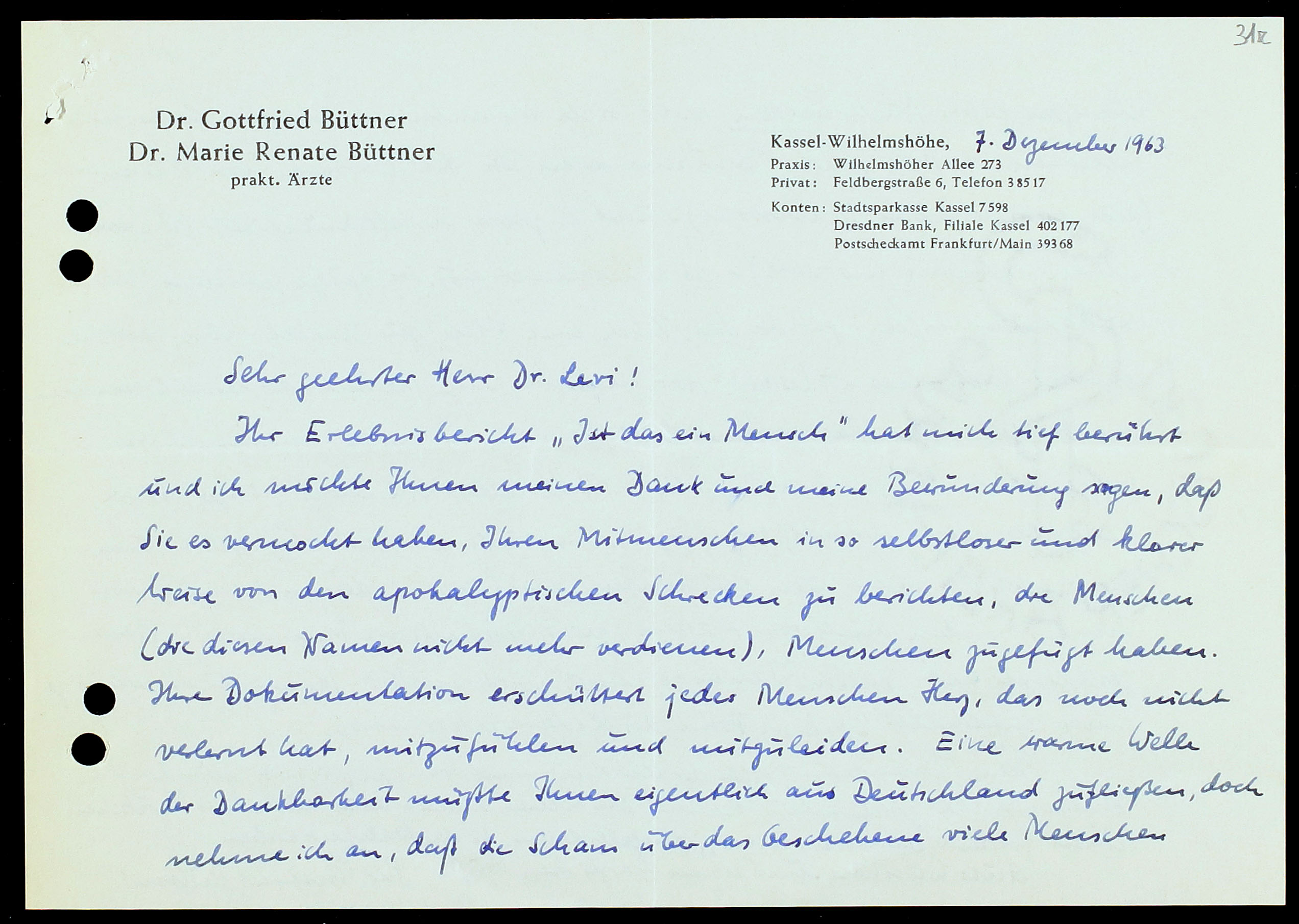
Sehr geehrter Herr Dr. Levi!
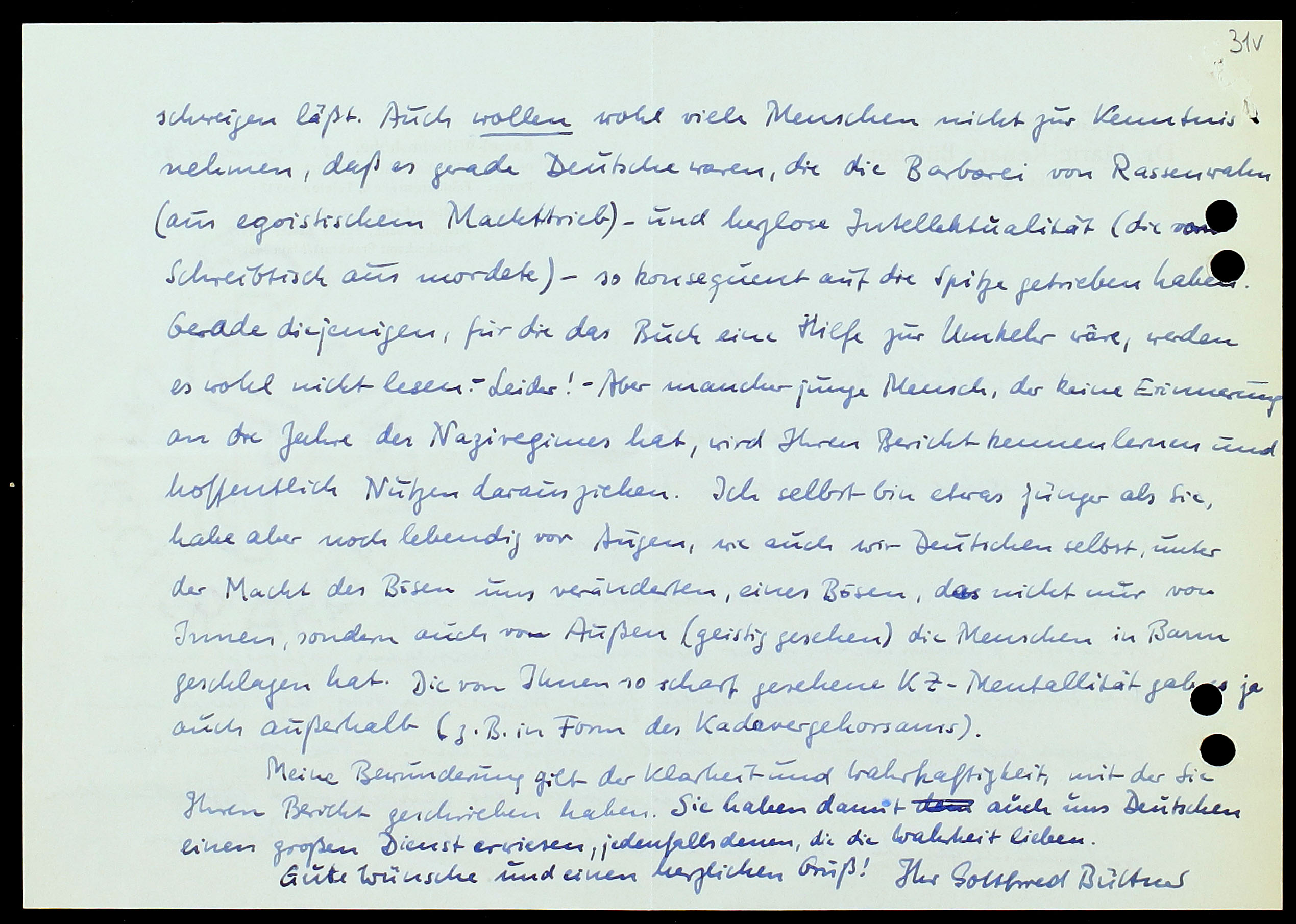
Ihr Erlebnisbericht Ist das ein Mensch hat mich tief berührt und ich möchte Ihnen meinen Dank und meine Bewunderung sagen, daß Sie es vermochtet haben, Ihnen Mitmenschen in so selbstloser und klarer Weise von den apokalyptischen Schrecken zu berichten, die Menschen (die diesem Namen nicht mehr verdienen), Menschen zugefügt haben. Ihre Dokumentation erschüttert jedes Menschen Herz, das noch nicht verlernt hat, mitzufühlen und mitzuleiden. Eine warme Welle der Dankbarkeit musste Ihnen eigentlich aus Deutschland zufließen, doch nehme ich an, daß die Scham über das Geschehene viele Menschen schweigen läßt. Auch wollen wohl viele Menschen nicht zur Kenntnis nehmen, daß es gerade Deutsche waren, die die Barbarei von Rassenwahn (aus egoistischen Machttrieb) – und herzlose Intellektualität (die von Schreibtisch aus mordete) – so konsequent auf die Spitze getrieben haben.
Gerade diejenigen, für die das Buch eine Hilfe zur Umkehr wäre, werden es wohl nicht lesen. – Leider! – Aber mancher junge Mensch, der keine Erinnerung an die Jahre der Naziregimen hat, wird Ihren Bericht kennenlernen und hoffentlich Nutzen darausziehen. Ich selbst bin etwas jünger als Sie, habe aber noch lebendig vor Augen, wie auch wir Deutschen selbst, unter der Machte des Bösen uns veränderen, einen Bösen, das nicht nur von Ihnen, sondern auch vom Außen (geistig gesehen) die Menschen in bann geschlagen hat. Die von Ihnen so scharft gesehene KZ-Mentalität gab es ja auch außenhalb (z.B. in Form des Kadavergehorsams[1]).
Meine Bewunderung gibt der Klarheit und Wahrhaftigkeit, mit der Sie Ihnen Bericht geschrieben haben. Sie haben damit[2] auch uns Deutschen einen großen Dienst erwiesen, jedenfalls denen, die die Wahrheit lieben.
Gute Wunsche und einen herzlichen Grüß!
Ihr Gottfried Büttner
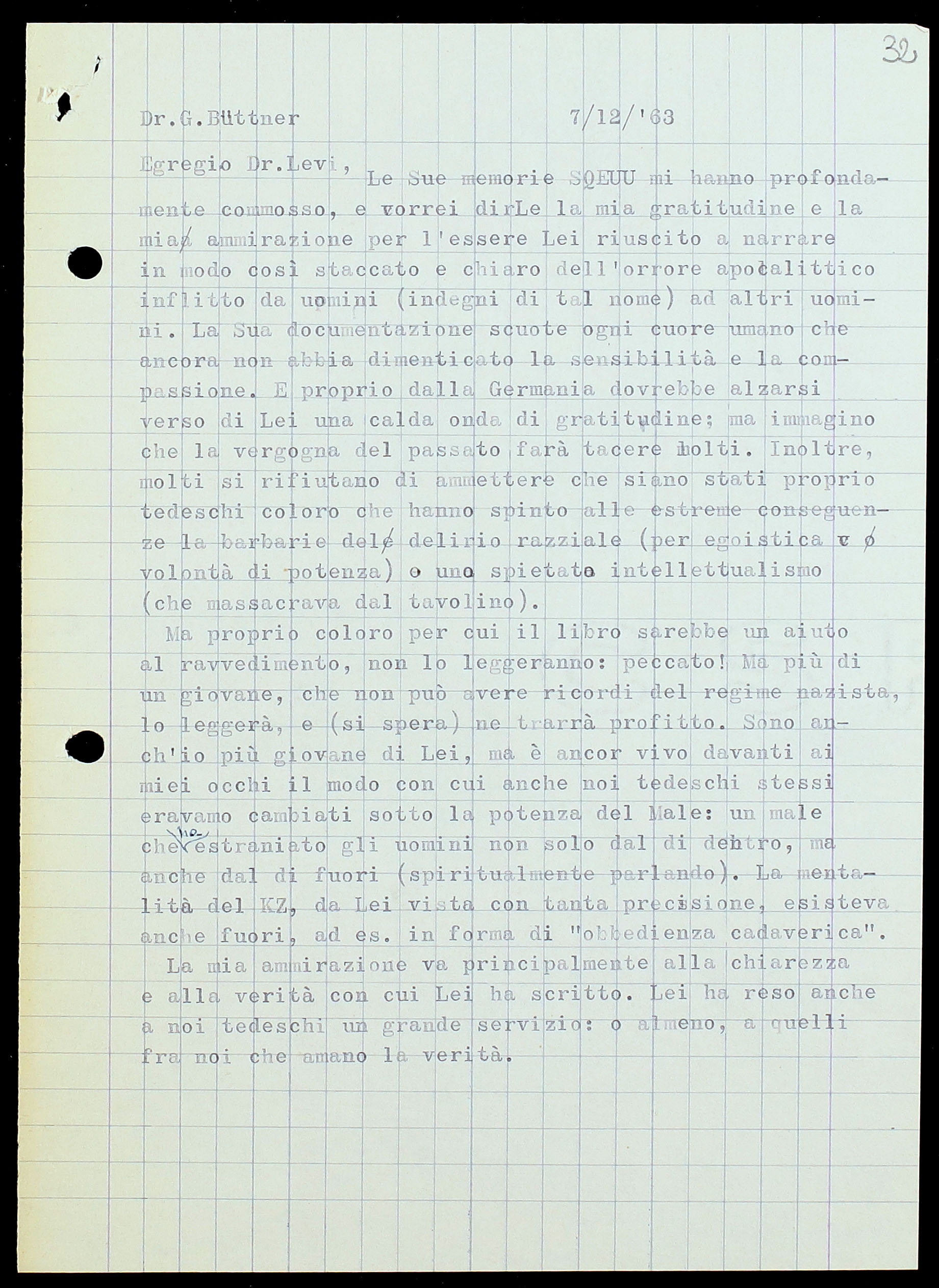
7/12/’63
Dr. G. Büttner
Egregio Dr. Levi,
Le Sue memorie SQEUU mi hanno profondamente commosso, e vorrei dirLe la mia gratitudine e la mia ammirazione per l’essere Lei riuscito a narrare in modo così staccato e chiaro dell’orrore apocalittico inflitto da uomini (indegni di tal nome) ad altri uomini. La Sua documentazione scuote ogni cuore umano che ancora non abbia dimenticato la sensibilità e la compassione. E proprio dalla Germania dovrebbe alzarsi verso di Lei una calda onda di gratitudine; ma immagino che la vergogna del passato farà tacere molti. Inoltre, molti si rifiutano di ammettere che siano stati proprio tedeschi coloro che hanno spinto alle estreme conseguenze la barbarie del delirio razziale (per egoistica volontà di potenza) o uno spietato intellettualismo (che massacrava dal tavolino).
Ma proprio coloro per cui il libro sarebbe un aiuto al ravvedimento, non lo leggeranno: peccato! Ma più di un giovane, che non può avere ricordi del regime nazista, lo leggerà, e (si spera) ne trarrà profitto. Sono anch’io più giovane di Lei, ma è ancor vivo davanti ai miei occhi il modo con cui anche noi tedeschi stessi eravamo cambiati sotto la potenza del Male: un male che haI estraniato gli uomini non solo dal di dentro, anche dal di fuori (spiritualmente parlando). La mentalità del KZ, da lei vista con tanta precisione, esisteva anche fuori, ad es. in forma di “obbedienza cadaverica”.[1]
La mia ammirazione va principalmente alla chiarezza e alla verità con cui Lei ha scritto. Lei ha reso[2] anche a noi tedeschi un grande servizio: o almeno, a quelli fra noi che amano la verità.
December 7, 1963
Dear Mr. Levi!
The account of your experiences in If This is a Man moved me deeply, and I would like to express my gratitude and admiration for the skill with which you tell your fellow human beings, in such a selfless and clear manner, about the apocalyptic horrors that people (who no longer deserve the name) have inflicted upon other people. Your report will move to the very core every human being who has not yet forgotten how to empathize and sympathize. An enormous wave of gratitude must have swept over you from Germany, but I also assume that shame over what happened will have caused many people to remain silent. Many people also do not want to acknowledge that it was Germans who so consistently took the barbarism of racial fanaticism (out of a selfish lust for power)—and heartless intellectualism (which committed murder from behind a desk)—to such extremes.
Precisely those for whom the book would be an aid to repentance probably will not read it.—Unfortunately!—But some young people who have no memory of the years of Nazi rule will read your account and, one hopes, benefit from it. I myself am somewhat younger than you, but I still vividly remember how we ourselves, we Germans, changed under the power of evil, an evil that captivated people not only from within, but also from outside (spiritually speaking). The concentration-camp mentality you saw so clearly also existed outside (in the form of blind obedience,[1] for example).
I admire the clarity and truthfulness with which you wrote your account. In so doing,[2] you have also done us Germans—at least those of us who love the truth—a great service.
Best wishes and warm regards!
Yours, Gottfried Büttner
7. Dezember 1963
Sehr geehrter Herr Dr. Levi!
Ihr Erlebnisbericht Ist das ein Mensch hat mich tief berührt und ich möchte Ihnen meinen Dank und meine Bewunderung sagen, daß Sie es vermochtet haben, Ihnen Mitmenschen in so selbstloser und klarer Weise von den apokalyptischen Schrecken zu berichten, die Menschen (die diesem Namen nicht mehr verdienen), Menschen zugefügt haben. Ihre Dokumentation erschüttert jedes Menschen Herz, das noch nicht verlernt hat, mitzufühlen und mitzuleiden. Eine warme Welle der Dankbarkeit musste Ihnen eigentlich aus Deutschland zufließen, doch nehme ich an, daß die Scham über das Geschehene viele Menschen schweigen läßt. Auch wollen wohl viele Menschen nicht zur Kenntnis nehmen, daß es gerade Deutsche waren, die die Barbarei von Rassenwahn (aus egoistischen Machttrieb) – und herzlose Intellektualität (die von Schreibtisch aus mordete) – so konsequent auf die Spitze getrieben haben.
Gerade diejenigen, für die das Buch eine Hilfe zur Umkehr wäre, werden es wohl nicht lesen. – Leider! – Aber mancher junge Mensch, der keine Erinnerung an die Jahre der Naziregimen hat, wird Ihren Bericht kennenlernen und hoffentlich Nutzen darausziehen. Ich selbst bin etwas jünger als Sie, habe aber noch lebendig vor Augen, wie auch wir Deutschen selbst, unter der Machte des Bösen uns veränderen, einen Bösen, das nicht nur von Ihnen, sondern auch vom Außen (geistig gesehen) die Menschen in bann geschlagen hat. Die von Ihnen so scharft gesehene KZ-Mentalität gab es ja auch außenhalb (z.B. in Form des Kadavergehorsams[1]).
Meine Bewunderung gibt der Klarheit und Wahrhaftigkeit, mit der Sie Ihnen Bericht geschrieben haben. Sie haben damit[2] auch uns Deutschen einen großen Dienst erwiesen, jedenfalls denen, die die Wahrheit lieben.
Gute Wunsche und einen herzlichen Grüß!
Ihr Gottfried Büttner
7/12/’63
Dr. G. Büttner
Egregio Dr. Levi,
Le Sue memorie SQEUU mi hanno profondamente commosso, e vorrei dirLe la mia gratitudine e la mia ammirazione per l’essere Lei riuscito a narrare in modo così staccato e chiaro dell’orrore apocalittico inflitto da uomini (indegni di tal nome) ad altri uomini. La Sua documentazione scuote ogni cuore umano che ancora non abbia dimenticato la sensibilità e la compassione. E proprio dalla Germania dovrebbe alzarsi verso di Lei una calda onda di gratitudine; ma immagino che la vergogna del passato farà tacere molti. Inoltre, molti si rifiutano di ammettere che siano stati proprio tedeschi coloro che hanno spinto alle estreme conseguenze la barbarie del delirio razziale (per egoistica volontà di potenza) o uno spietato intellettualismo (che massacrava dal tavolino).
Ma proprio coloro per cui il libro sarebbe un aiuto al ravvedimento, non lo leggeranno: peccato! Ma più di un giovane, che non può avere ricordi del regime nazista, lo leggerà, e (si spera) ne trarrà profitto. Sono anch’io più giovane di Lei, ma è ancor vivo davanti ai miei occhi il modo con cui anche noi tedeschi stessi eravamo cambiati sotto la potenza del Male: un male che haI estraniato gli uomini non solo dal di dentro, anche dal di fuori (spiritualmente parlando). La mentalità del KZ, da lei vista con tanta precisione, esisteva anche fuori, ad es. in forma di “obbedienza cadaverica”.[1]
La mia ammirazione va principalmente alla chiarezza e alla verità con cui Lei ha scritto. Lei ha reso[2] anche a noi tedeschi un grande servizio: o almeno, a quelli fra noi che amano la verità.
December 7, 1963
Dear Mr. Levi!
The account of your experiences in If This is a Man moved me deeply, and I would like to express my gratitude and admiration for the skill with which you tell your fellow human beings, in such a selfless and clear manner, about the apocalyptic horrors that people (who no longer deserve the name) have inflicted upon other people. Your report will move to the very core every human being who has not yet forgotten how to empathize and sympathize. An enormous wave of gratitude must have swept over you from Germany, but I also assume that shame over what happened will have caused many people to remain silent. Many people also do not want to acknowledge that it was Germans who so consistently took the barbarism of racial fanaticism (out of a selfish lust for power)—and heartless intellectualism (which committed murder from behind a desk)—to such extremes.
Precisely those for whom the book would be an aid to repentance probably will not read it.—Unfortunately!—But some young people who have no memory of the years of Nazi rule will read your account and, one hopes, benefit from it. I myself am somewhat younger than you, but I still vividly remember how we ourselves, we Germans, changed under the power of evil, an evil that captivated people not only from within, but also from outside (spiritually speaking). The concentration-camp mentality you saw so clearly also existed outside (in the form of blind obedience,[1] for example).
I admire the clarity and truthfulness with which you wrote your account. In so doing,[2] you have also done us Germans—at least those of us who love the truth—a great service.
Best wishes and warm regards!
Yours, Gottfried Büttner
Info
Note
Tag
Mittente: Gottfried Büttner
Destinatario: Primo Levi
Data di stesura: 1963-12-07
Luogo di stesura: Kassel
Descrizione del documento: lettera ms. a stilografica blu su carta intestata, (mm. 210x150); la traduzione di Levi è ds. su carta di quaderno A5 a quadretti, (mm. 150x220)
Archivio: Archivio privato di Primo Levi, Torino
Segnatura: Complesso di Fondi primo Levi, Fondo Primo Levi, Corrispondenza, Corrispondenti particolari, fasc. 20, sottofasc. 001, doc. 015, ff. 31r/v, 32 (trad.).
Fogli: 1, recto e verso, 1 solo recto.
Intestazione:Dr. Gottfried BüttnerDr. Marie Renate Büttner
prakt. Ärzte
Kassel-Wilhelmshöhe,
Praxis: Wilhelmshöher Allee 273
Privat: Feldberstraße 6, telefon 38517
Konten: Stadtsparkkasse Kassel 7 598
Dresdner Bank, Filiale Kassel 402 177
Postscheckamt Frankfurt/Main 39368
DOI:
1
Di derivazione teologica (perinder ac cadever), il concetto di Kadavergehorsam verrà ripreso all’interno della tradizione militarista prussiana per indicare la “virtù” di un’obbedienza cieca e incondizionata. Cfr. N.P. Nielsen, L’universo mentale «nazista», FrancoAngeli Editore, Milano 2004, pp. 85-86. Mutuato in seguito dal Nazismo, Kadavergehorsam sarà utilizzato e reso nuovamente celebre da Adolf Eichmann durante il processo di Gerusalemme del 1961. Come riporta Hannah Arendt in La Banalità del Male (“Eichmann in Jerusalem”) del 1963 (forse proprio la fonte di Büttner): «Oltre ad aver fatto quello che a suo giudizio era il dovere di un cittadino ligio alla legge, egli aveva anche agito in base agli ordini, e perciò ora si smarrì completamente e finì con l’insistere alternativamente sui pregi e sui difetti dell’obbedienza cieca, ossia dell’“obbedienza cadaverica”, Kadavergehorsam, come la chiamava lui». Cfr. H. Arendt, La banalità del male. Eichmann a Gerusalemme, Feltrinelli, Milano 2001, p. 142.
2
Segue «dem», biffato con un tratto di penna.
I
Si riporta a testo, in corsivo, la traduzione di Primo Levi della lettera. «ha» è aggiunto ms. a biro blu.