Edeltrud Hellbusch, a correspondent from the city of Karlsruhe, writes that she distractedly boughtIf This Is a Man and was profoundly shocked and moved by it.
Karlsruhe 4. Okt. 1968.
Sehr geehrter Dr. Levi!
Vor einigen Wochen kaufte ich an einem Bücherstand in der Bahnhofshalle ein Fischer-buch.
Ich kaufte es unüberlegt, ich wollte irgendwas lesen. Und dann war ich beim lesen erschrocken, entsetzt, so tief berührt. Ich las dieses schreckliche Buch, erschüttert erfuhr ich was wir Deutschen den Menschen angetan haben, die nicht so dachten, sprachen; die anders waren als wir.
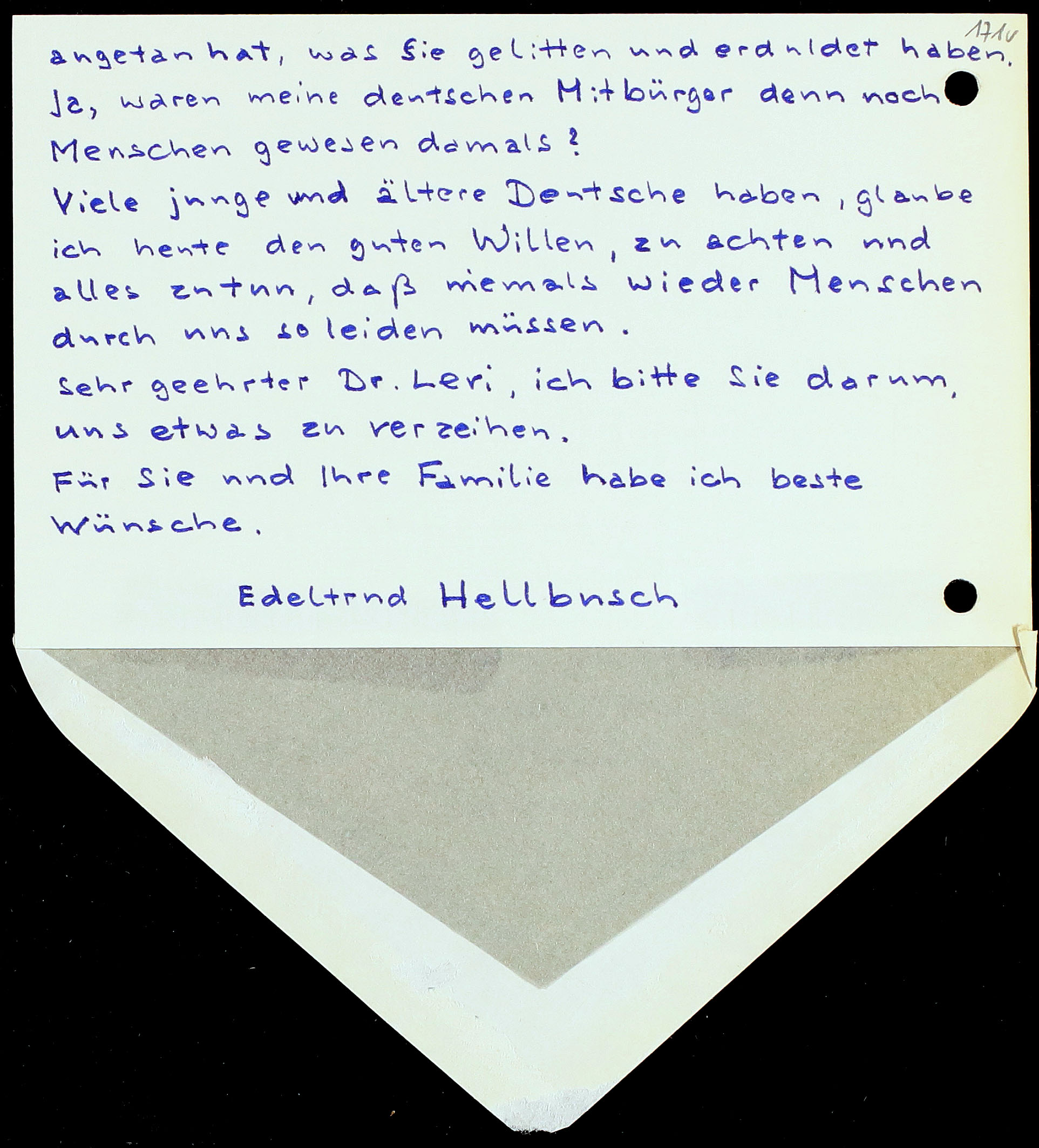
Wie kann ich (einzige Tochter, immer behütet, nie gehungert, nie gefroren) je erfassen, was man Ihnen und allen Ihren Kameraden angetan hat, was Sie gelitten und erduldet haben.
Ja, waren meine deutschen Mitbürger denn noch Menschen gewesen damals?
Viele junge und ältere Deutsche haben, glaube ich heute den guten Willen, zu achten und alles zutun, daß niemals wieder Menschen durch uns so leiden müssen.
Sehr geehrter Dr. Levi, ich bitte Sie darum, uns etwas zu verzeihen.
Für Sie und Ihre Familie habe ich beste Wünsche.
Edeltrud Hellbusch
Karlsruhe 4 ottobre 1968
Stimatissimo Dottor Levi,
qualche settimana fa ho acquistato in una libreria della stazione un libro della casa editrice Fischer.
L’avevo comprato senza pensarci troppo, volevo semplicemente qualcosa da leggere. E poi, leggendolo, sono rimasta sconvolta, turbata, profondamente colpita. Ho letto questo libro terribile e, con sgomento, ho compreso il male che noi tedeschi abbiamo fatto a esseri umani che non pensavano, non parlavano come noi; persone che erano diverse.
Come posso (io, figlia unica, sempre protetta, ignara di cosa sia la fame e il freddo), comprendere davvero il male che è stato fatto a Lei e ai Suoi compagni, tutto ciò che avete patito e sopportato.
E mi chiedo: erano uomini i miei concittadini tedeschi di allora?
Oggi credo che molti tedeschi, giovani e meno giovani, abbiano la sincera volontà di rispettare gli altri e di fare tutto il possibile affinché nessuno debba più soffrire così a causa nostra.
Stimatissimo Dottor Levi, Le chiedo di perdonarci, almeno un poco.
A Lei e alla Sua famiglia rivolgo i miei più sinceri auguri.
Edeltrud Hellbusch
Karlsruhe, Oct. 4, 1968
Dear Mr. Levi!
A few weeks ago, I bought a book published by Fischer from a bookstall in the train station.
I bought it without thinking, I just wanted something to read. And then, as I read, I was shocked, horrified, deeply moved. I read this terrible book and was shaken to learn what we Germans did to people who did not think or speak like us, who were different from us.
How could I (an only daughter, always protected, never hungry, never cold) ever comprehend what was done to you and all your comrades, what you suffered and endured?
Indeed: Back then, were my fellow German citizens still human beings?
I believe many Germans, both young and older, now have enough good will to pay attention and do everything possible to ensure that people never again need to suffer so much because of us.
Dear Mr. Levi, I ask you to forgive us.
I wish you and your family all the best.
Edeltrud Hellbusch
Karlsruhe 4. Okt. 1968.
Sehr geehrter Dr. Levi!
Vor einigen Wochen kaufte ich an einem Bücherstand in der Bahnhofshalle ein Fischer-buch.
Ich kaufte es unüberlegt, ich wollte irgendwas lesen. Und dann war ich beim lesen erschrocken, entsetzt, so tief berührt. Ich las dieses schreckliche Buch, erschüttert erfuhr ich was wir Deutschen den Menschen angetan haben, die nicht so dachten, sprachen; die anders waren als wir.
Wie kann ich (einzige Tochter, immer behütet, nie gehungert, nie gefroren) je erfassen, was man Ihnen und allen Ihren Kameraden angetan hat, was Sie gelitten und erduldet haben.
Ja, waren meine deutschen Mitbürger denn noch Menschen gewesen damals?
Viele junge und ältere Deutsche haben, glaube ich heute den guten Willen, zu achten und alles zutun, daß niemals wieder Menschen durch uns so leiden müssen.
Sehr geehrter Dr. Levi, ich bitte Sie darum, uns etwas zu verzeihen.
Für Sie und Ihre Familie habe ich beste Wünsche.
Edeltrud Hellbusch
Karlsruhe 4 ottobre 1968
Stimatissimo Dottor Levi,
qualche settimana fa ho acquistato in una libreria della stazione un libro della casa editrice Fischer.
L’avevo comprato senza pensarci troppo, volevo semplicemente qualcosa da leggere. E poi, leggendolo, sono rimasta sconvolta, turbata, profondamente colpita. Ho letto questo libro terribile e, con sgomento, ho compreso il male che noi tedeschi abbiamo fatto a esseri umani che non pensavano, non parlavano come noi; persone che erano diverse.
Come posso (io, figlia unica, sempre protetta, ignara di cosa sia la fame e il freddo), comprendere davvero il male che è stato fatto a Lei e ai Suoi compagni, tutto ciò che avete patito e sopportato.
E mi chiedo: erano uomini i miei concittadini tedeschi di allora?
Oggi credo che molti tedeschi, giovani e meno giovani, abbiano la sincera volontà di rispettare gli altri e di fare tutto il possibile affinché nessuno debba più soffrire così a causa nostra.
Stimatissimo Dottor Levi, Le chiedo di perdonarci, almeno un poco.
A Lei e alla Sua famiglia rivolgo i miei più sinceri auguri.
Edeltrud Hellbusch
Karlsruhe, Oct. 4, 1968
Dear Mr. Levi!
A few weeks ago, I bought a book published by Fischer from a bookstall in the train station.
I bought it without thinking, I just wanted something to read. And then, as I read, I was shocked, horrified, deeply moved. I read this terrible book and was shaken to learn what we Germans did to people who did not think or speak like us, who were different from us.
How could I (an only daughter, always protected, never hungry, never cold) ever comprehend what was done to you and all your comrades, what you suffered and endured?
Indeed: Back then, were my fellow German citizens still human beings?
I believe many Germans, both young and older, now have enough good will to pay attention and do everything possible to ensure that people never again need to suffer so much because of us.
Dear Mr. Levi, I ask you to forgive us.
I wish you and your family all the best.
Edeltrud Hellbusch
Info
Notes
Tag
Sender: Edeltrud Kunzmann-Hellbusch
Addressee: Primo Levi
Date of Drafting: 1968-10-04
Place of Writing: Karlsruhe
Description:note handwritten in blue fountain pen; to the note, adhesive tape attaches the back flap of the envelope in which it was sent, with the address of the sender: “Abs. E. Hellbusch | 75 Karlsruhe 1 | Draisstr. 9 | Germania.”
Archive: Archivio privato di Primo Levi, Turin
Series: Complesso di fondi Primo Levi, Fondo Primo Levi, Corrispondenza, Corrispondenti particolari, Fasc. 20, sottofasc. 1, doc. 060, f. 171r/v