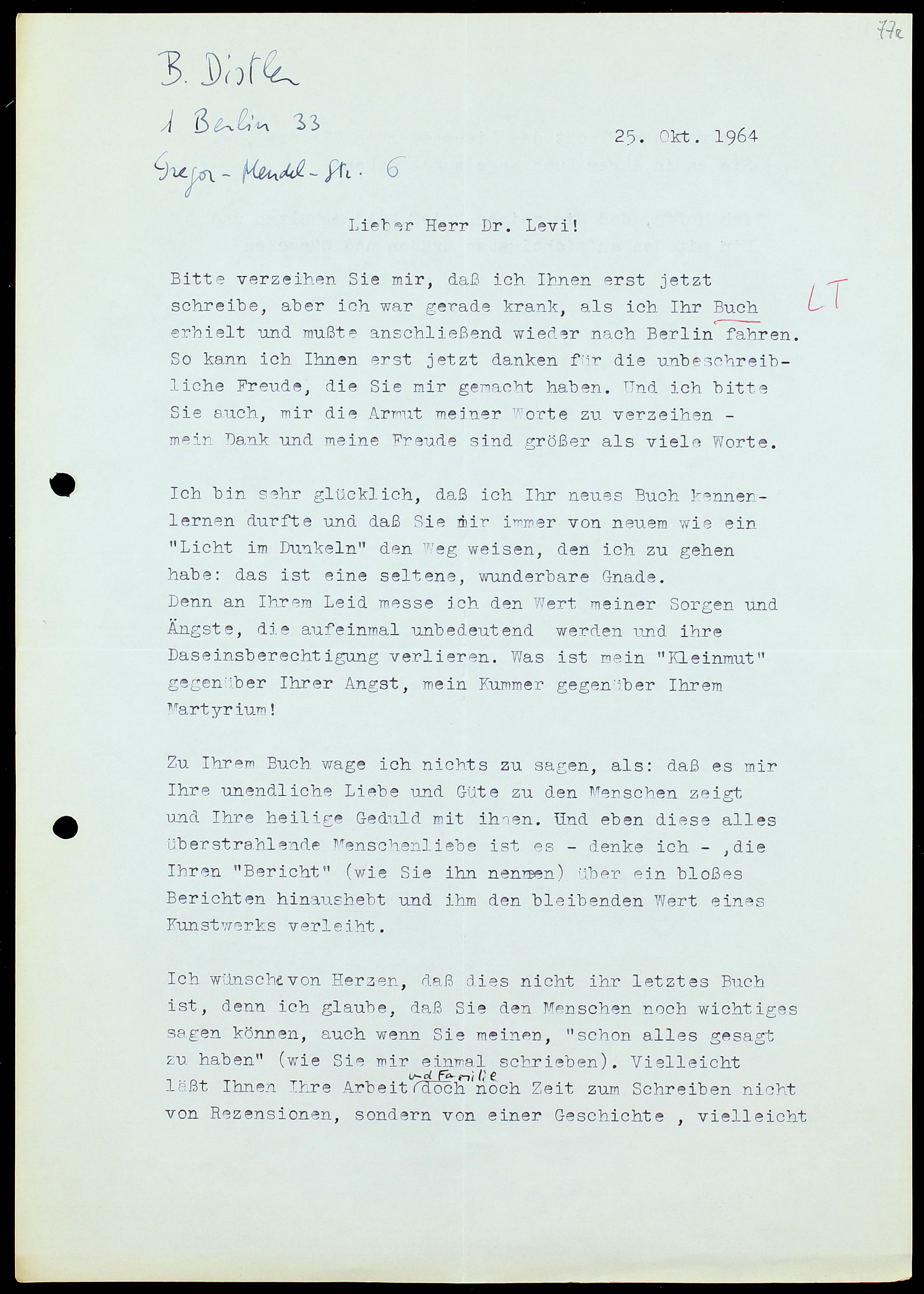
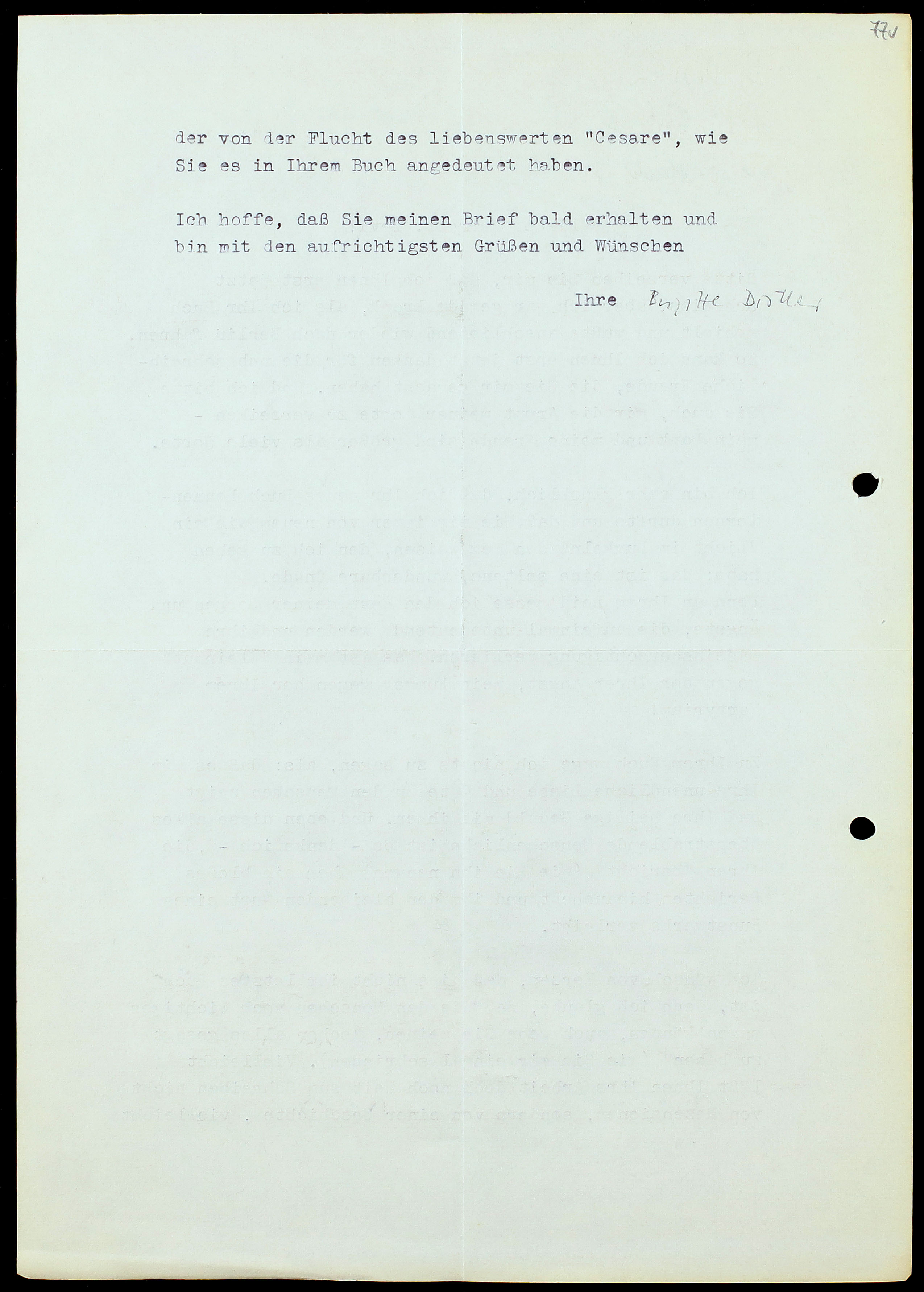
Distler thanks Levi for the gift he has sent her – a copy of the German edition of The Truce, just released – and hopes he will write other books.
25 Okt. 1964
Lieber Herr Dr. Levi!
Bitte verzeihen Sie mir, daß ich Ihnen erst jetzt schreibe, aber ich war gerade krank, als ich Ihr Buch[1] erhielt und mußte anschließend wieder nach Berlin fahren. So kann ich Ihnen erst jetzt danken für die unbeschreibliche Freude, die Sie mir gemacht haben. Und ich bitte Sie auch, mir die Armut meiner Worte zu verzeihen – mein Dank und meine Freude sind größer als viele Worte.
Ich bin sehr glücklich, daß ich Ihr neues Buch kennenlernen durfte und daß Sie mir immer von neuem wie ein „Licht im Dunkeln“ den Weg weisen, den ich zu gehen habe: das ist eine seltene, wanderbare Gnade.
Denn an Ihrem Leid messe ich den Wert meiner Sorgen und Ängste, die aufeinmal unbedeutend werden und ihre Daseinsberechtigung verlieren. Was ist mein „Kleinmut“ gegenüber Ihrer Angst, mein Kummer gegenüber Ihrem Martyrium!
Zu Ihrem Buch wage ich nichts zu sagen, als: daß es mir Ihre unendliche Liebe und Güte zu den Menschen zeigt und Ihre heilige Geduld mit ihnen. Und eben diese alles überstrahlende Menschenliebe ist es – denke ich –, die Ihren „Bericht“ (wie Sie ihn nennen) über ein bloßes Berichten hinaushebt und ihm den bleibenden Wert eines Kunstwerks verleiht.
Ich wünsche von Herzen, daß dies nicht ihr letztes Buch ist, denn ich glaube, daß Sie den Menschen noch wichtiges sagen können, auch wenn Sie meinen, „schon alles gesagt zu haben“ (wie Sie mir einmal schrieben). Vielleicht läßt Ihnen Ihre Arbeit und Familie[2] doch noch Zeit zum Schreiben nicht von Rezensionen, sondern von einer Geschichte, vielleicht der von der Flucht des liebenswerten „Cesare“, wie Sie es in Ihrem Buch angedeutet haben.[3]
Ich hoffe, daß Sie meinen Brief bald erhalten und bin mit den aufrichtigsten Grüßen und Wünschen
Ihre Brigitte Distler
25 ottobre 1964
Caro Dottor Levi,
Mi perdoni se Le scrivo soltanto adesso: quando ho ricevuto il Suo libro[1] ero malata, e poi ho dovuto tornare a Berlino. Dunque solo ora posso ringraziarLa della gioia indescrivibile che mi ha dato. E La prego anche di scusare la povertà con cui mi esprimo: la mia gratitudine e la mia gioia sono più grandi di tante parole.
Sono molto felice di aver potuto conoscere il suo nuovo libroe che ancora una volta, come una “luce nel buio”, Lei mi indichi la strada che devo percorrere: è una grazia meravigliosa e rara.
Perché sul Suo dolore misuro il peso delle mie preoccupazioni e delle mie paure, che di colpo appaiono insignificanti e perdono ogni legittimità. Che cos’è la mia “pusillanimità” di fronte alla Sua angoscia, il mio affanno di fronte al Suo martirio!
Del Suo libro non oso dire altro se non questo: che in esso si manifesta il Suo amore sconfinato per gli uomini e la sua santa pazienza nei loro confronti. Ed è proprio questo sovrano amore per l’umanità – io credo – a innalzare la Sua “testimonianza” (come la chiama Lei) ben oltre la semplice cronaca, e a conferirle il valore duraturo di un’opera d’arte.
Di cuore Le auguro che questo non sia il Suo ultimo libro, perché sono convinta che Lei abbia ancora cose importanti da dire agli uomini, anche se pensa di “aver già detto tutto” (come mi ha scritto una volta). Forse il Suo lavoro e la Sua famiglia[2] Le lasceranno ancora un po’ di tempo per scrivere, non recensioni, ma una storia: magari quella della fuga dal caro “Cesare”, come Lei stesso ha accennato nel Suo libro.[3]
Spero che questa mia le giunga presto e La saluto con i più sinceri auguri, Sua
Brigitte Distler
Oct. 25, 1964
Dear Mr. Levi,
Please forgive me for writing to you only now, but I was ill when I received your book[1] and then had to return to Berlin. So I am only now able to thank you for the indescribable joy you have given me. And I also ask you to forgive the poverty of my words—my gratitude and joy are greater than many words can express.
I am very happy to have been able to read your new book and that you continue to show me, like a “light in the darkness,” the path I must follow: this is a rare and wonderful blessing.
For it is by your suffering that I measure the value of my worries and fears, which suddenly become insignificant and lose their raison d’être. What is my “timidity” compared to your fear, my sorrow compared to your martyrdom?!
I dare say nothing about your book except that it shows me your infinite love and kindness toward people and your holy patience with them. And it is precisely this all-encompassing love of humanity that, I think, elevates your “report” (as you call it) beyond mere reporting and gives it the lasting value of a work of art.
I hope from the bottom of my heart that this is not your last book, for I believe that you still have important things to say to people, even if you think you have “already said everything” (as you once wrote to me). Perhaps your work and family[2] will still leave you time to write, not reviews, but a story, maybe even the story of dear “Cesare” and his escape, as you hinted at in your book.[3]
I hope you receive my letter soon, and send you my sincerest regards and best wishes.
Yours,
Brigitte Distler
25 Okt. 1964
Lieber Herr Dr. Levi!
Bitte verzeihen Sie mir, daß ich Ihnen erst jetzt schreibe, aber ich war gerade krank, als ich Ihr Buch[1] erhielt und mußte anschließend wieder nach Berlin fahren. So kann ich Ihnen erst jetzt danken für die unbeschreibliche Freude, die Sie mir gemacht haben. Und ich bitte Sie auch, mir die Armut meiner Worte zu verzeihen – mein Dank und meine Freude sind größer als viele Worte.
Ich bin sehr glücklich, daß ich Ihr neues Buch kennenlernen durfte und daß Sie mir immer von neuem wie ein „Licht im Dunkeln“ den Weg weisen, den ich zu gehen habe: das ist eine seltene, wanderbare Gnade.
Denn an Ihrem Leid messe ich den Wert meiner Sorgen und Ängste, die aufeinmal unbedeutend werden und ihre Daseinsberechtigung verlieren. Was ist mein „Kleinmut“ gegenüber Ihrer Angst, mein Kummer gegenüber Ihrem Martyrium!
Zu Ihrem Buch wage ich nichts zu sagen, als: daß es mir Ihre unendliche Liebe und Güte zu den Menschen zeigt und Ihre heilige Geduld mit ihnen. Und eben diese alles überstrahlende Menschenliebe ist es – denke ich –, die Ihren „Bericht“ (wie Sie ihn nennen) über ein bloßes Berichten hinaushebt und ihm den bleibenden Wert eines Kunstwerks verleiht.
Ich wünsche von Herzen, daß dies nicht ihr letztes Buch ist, denn ich glaube, daß Sie den Menschen noch wichtiges sagen können, auch wenn Sie meinen, „schon alles gesagt zu haben“ (wie Sie mir einmal schrieben). Vielleicht läßt Ihnen Ihre Arbeit und Familie[2] doch noch Zeit zum Schreiben nicht von Rezensionen, sondern von einer Geschichte, vielleicht der von der Flucht des liebenswerten „Cesare“, wie Sie es in Ihrem Buch angedeutet haben.[3]
Ich hoffe, daß Sie meinen Brief bald erhalten und bin mit den aufrichtigsten Grüßen und Wünschen
Ihre Brigitte Distler
25 ottobre 1964
Caro Dottor Levi,
Mi perdoni se Le scrivo soltanto adesso: quando ho ricevuto il Suo libro[1] ero malata, e poi ho dovuto tornare a Berlino. Dunque solo ora posso ringraziarLa della gioia indescrivibile che mi ha dato. E La prego anche di scusare la povertà con cui mi esprimo: la mia gratitudine e la mia gioia sono più grandi di tante parole.
Sono molto felice di aver potuto conoscere il suo nuovo libroe che ancora una volta, come una “luce nel buio”, Lei mi indichi la strada che devo percorrere: è una grazia meravigliosa e rara.
Perché sul Suo dolore misuro il peso delle mie preoccupazioni e delle mie paure, che di colpo appaiono insignificanti e perdono ogni legittimità. Che cos’è la mia “pusillanimità” di fronte alla Sua angoscia, il mio affanno di fronte al Suo martirio!
Del Suo libro non oso dire altro se non questo: che in esso si manifesta il Suo amore sconfinato per gli uomini e la sua santa pazienza nei loro confronti. Ed è proprio questo sovrano amore per l’umanità – io credo – a innalzare la Sua “testimonianza” (come la chiama Lei) ben oltre la semplice cronaca, e a conferirle il valore duraturo di un’opera d’arte.
Di cuore Le auguro che questo non sia il Suo ultimo libro, perché sono convinta che Lei abbia ancora cose importanti da dire agli uomini, anche se pensa di “aver già detto tutto” (come mi ha scritto una volta). Forse il Suo lavoro e la Sua famiglia[2] Le lasceranno ancora un po’ di tempo per scrivere, non recensioni, ma una storia: magari quella della fuga dal caro “Cesare”, come Lei stesso ha accennato nel Suo libro.[3]
Spero che questa mia le giunga presto e La saluto con i più sinceri auguri, Sua
Brigitte Distler
Oct. 25, 1964
Dear Mr. Levi,
Please forgive me for writing to you only now, but I was ill when I received your book[1] and then had to return to Berlin. So I am only now able to thank you for the indescribable joy you have given me. And I also ask you to forgive the poverty of my words—my gratitude and joy are greater than many words can express.
I am very happy to have been able to read your new book and that you continue to show me, like a “light in the darkness,” the path I must follow: this is a rare and wonderful blessing.
For it is by your suffering that I measure the value of my worries and fears, which suddenly become insignificant and lose their raison d’être. What is my “timidity” compared to your fear, my sorrow compared to your martyrdom?!
I dare say nothing about your book except that it shows me your infinite love and kindness toward people and your holy patience with them. And it is precisely this all-encompassing love of humanity that, I think, elevates your “report” (as you call it) beyond mere reporting and gives it the lasting value of a work of art.
I hope from the bottom of my heart that this is not your last book, for I believe that you still have important things to say to people, even if you think you have “already said everything” (as you once wrote to me). Perhaps your work and family[2] will still leave you time to write, not reviews, but a story, maybe even the story of dear “Cesare” and his escape, as you hinted at in your book.[3]
I hope you receive my letter soon, and send you my sincerest regards and best wishes.
Yours,
Brigitte Distler
Info
Notes
Tag
Sender: Brigitte Distler
Addressee: Primo Levi
Date of Drafting: 1964-10-25
Place of Writing: Berlin
Description:typewritten letter with handwritten signature in black ballpoint pen. The sheets have insertions handwritten by Distler in black ballpoint pen, and by Levi in red ballpoint pen. In the upper left-hand margin of f. 77r Levi has handwritten in blue ballpoint pen: “B. Distler | 1 Berlin 33 | Gregor – Mendel – Str. 6.”
Archive: Archivio privato di Primo Levi, Turin
Series: Complesso di Fondi primo Levi, Fondo Primo Levi, Corrispondenza, Corrispondenti particolari, fasc. 20, sottofasc. 001, doc. 027, 77r/v.
Folio: 1, front and back
DOI: https://doi.org/10.15160/pyw3-2815
1
“Buch” is underlined by hand in red ballpoint pen by Levi and is accompanied by the initials “LT” (an abbreviation for La tregua [The Truce]) in the outer margin of the sheet. Primo Levi most likely had his editor send a copy to Brigitte Distler since there is no indication in the correspondence conserved in Levi’s archives that he sent it to her.
2“und Familie” is added by Distler in black ballpoint pen.
3
Levi did, in fact, write a short story about Cesare’s return home. It appeared for the first time in La Stampa on September 7, 1980, entitled “L’impresa più ardita di un reduce scaltro” (“A crafty survivor’s most daring undertaking”); the story was later included in the section Present Perfect in Lilith, published in 1981 (“The Return of Cesare,” CW II, pp.1396-1400).